

Refinancing your mortgage makes sense when you can lower your rate enough to recoup closing costs before you move, remove PMI, shorten your term, switch from an ARM to a fixed rate, or consolidate high-interest debt responsibly. The single decision rule: only refinance if your monthly savings cover closing costs within the time you plan to stay in the home. Run that break-even math before anything else.
The highest-impact signs to refinance:
- Your interest rate would drop by at least 0.50%–1.00%
- You've built roughly 20% equity and still pay PMI
- You want to shorten your loan term and can handle a higher monthly payment
- You have an adjustable-rate mortgage approaching a reset date
- You need cash for a high-value purpose (renovation, high-interest debt payoff) and have sufficient equity
- Your credit score has improved significantly since you closed your original loan
Get at least two or three Loan Estimates from lenders or brokers and run the break-even calculation before committing to anything.
Key Takeaways
Refinancing is worth pursuing when your monthly savings recoup closing costs before you move, and when a clear financial goal, like removing PMI, shortening your term, or locking a fixed rate, drives the decision.
| Point | Details |
|---|---|
| Break-even is the core test | Divide total closing costs by monthly savings to find your break-even in months; only refinance if you'll stay longer. |
| Closing costs run 2%–6% | On a $320,000 loan, expect $6,400–$19,200 in upfront costs that must be recovered through monthly savings. |
| Rate drop threshold | Experts recommend a drop of at least 0.50%–1.00%, but loan size and remaining term change the right threshold for your situation. |
| Refinancing is a new application | Lenders re-verify income, assets, and DTI in full; prepare documents and check your credit before applying. |
| Lofirate for broker shopping | Lofirate matches homeowners with licensed wholesale brokers who compare multiple lenders to surface competitive refinance offers at no cost to the borrower. |
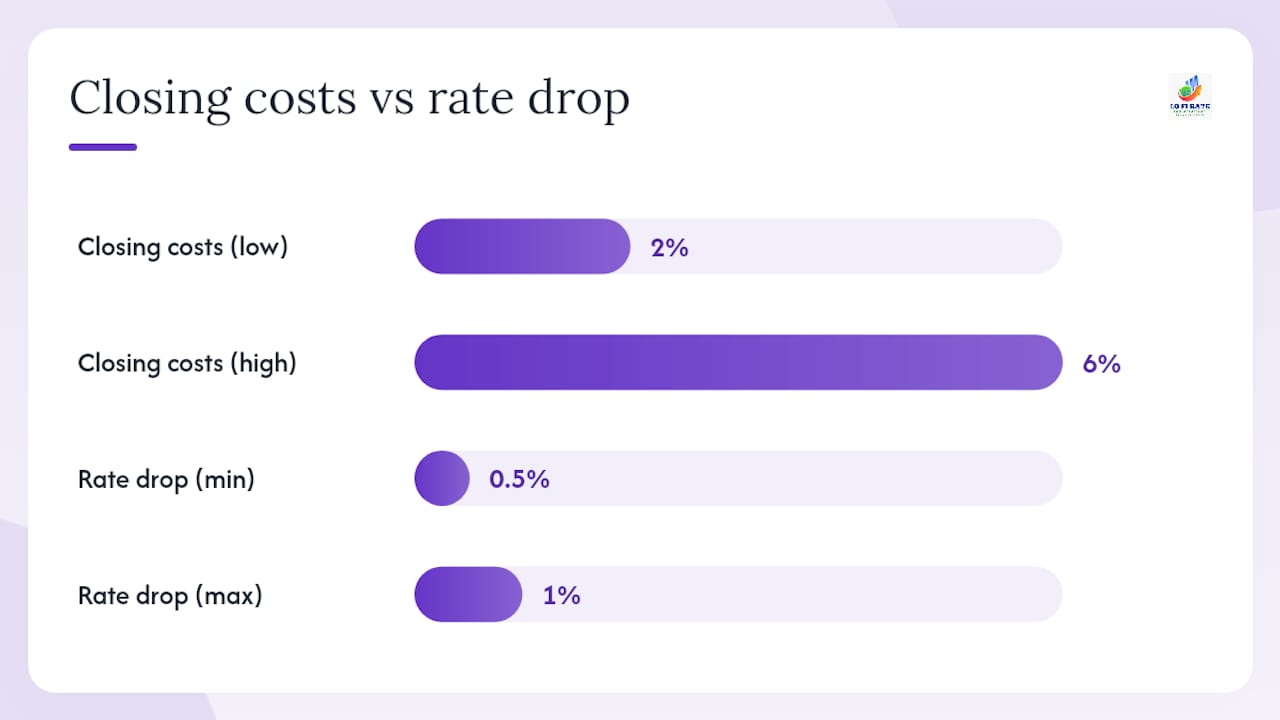
Table of Contents
- Clear signs you should refinance your mortgage
- How to calculate whether a refinance actually saves you money
- What refinancing actually costs you
- When refinancing is probably a bad idea
- How to prepare and shop for a refinance
- What the refinance process looks like from application to closing
- Expert insights that change the refinance calculation
- Lofirate's perspective on comparing refinance offers
- Get competitive refinance quotes through Lofirate
- Sources
Clear signs you should refinance your mortgage
1. Your interest rate would drop by 0.50% or more
Experts commonly recommend waiting until you can secure a rate roughly 0.50%–1.00% lower than your current one, with many pointing to 0.75% as a practical threshold. But that rule has limits. On a $500,000 loan, the same drop saves significantly more per month, so the break-even arrives faster.
The rate alone doesn't tell the whole story.
2. You still pay PMI and your equity has crossed 20%
Private mortgage insurance adds anywhere from a few hundred to over a thousand dollars annually to your loan cost, depending on the loan size and your original down payment. Once your home's value has risen or your balance has fallen enough to put you above 20% equity, refinancing can eliminate that cost entirely, even if your new rate is only modestly better.

Refinancing can remove PMI once equity exceeds about 20%, creating real savings even without a dramatic rate change. Some servicers will cancel PMI through a simple written request and a new appraisal, so compare that route against a full refinance before deciding.
3. You want to shorten your loan term
Switching from a 30-year to a 15-year mortgage typically raises your monthly payment but cuts total interest paid by a substantial margin.
The right question isn't whether the monthly payment goes up. It's whether the total interest savings over the life of the loan justify the higher payment given your income stability and other financial goals.
4. You have an ARM approaching a reset date
Adjustable-rate mortgages offer lower initial rates, but once the fixed period ends, the rate adjusts periodically based on a market index. If your ARM is within 12–18 months of its first reset and current fixed rates are reasonable, locking in now removes the uncertainty of future payment swings.
The timing matters. If rates have risen sharply since you took out the ARM, the math may still favor refinancing into a fixed rate to cap your exposure, even at a higher rate than your current teaser rate.
5. Your credit score has improved significantly
Mortgage pricing is tiered. A borrower at 760 gets a meaningfully different rate than one at 680, even in the same market on the same day. If your score has climbed 40–60 points since you closed your original loan, you may now qualify for a pricing tier that wasn't available to you before.
Improving your credit score in the six months before applying can materially affect the rate you receive, sometimes more than a modest market rate shift would. Pay down revolving balances, avoid new credit inquiries, and dispute any errors on your report before you apply.
6. You need cash for a high-value purpose
A cash-out refinance replaces your existing mortgage with a larger one and gives you the difference in cash.
The risk is real: you're converting unsecured debt into mortgage debt secured by your home. Discipline on the back end matters as much as the rate on the front end.
7. Your home value has risen and you want better terms overall
Rising home values increase your equity position, which can unlock better loan terms, eliminate PMI, and open the door to cash-out options that weren't available when you first closed. If your neighborhood has appreciated significantly and your original appraisal is now well below current market value, a new appraisal during refinancing could shift your LTV into a more favorable range.
The decision to refinance hinges on how long you plan to stay in the home, how much equity you've built, and whether monthly savings cover closing costs within your planned stay.
How to calculate whether a refinance actually saves you money
The break-even formula is straightforward: total closing costs ÷ monthly savings = months to break even. If you plan to stay in the home longer than that number of months, refinancing likely makes financial sense. If you're moving in two years and break-even is 36 months, it doesn't.
Here's a worked example with realistic numbers:
In this example, the homeowner needs to stay about 38 months (just over three years) to come out ahead. If they plan to sell in two years, the refinance costs them money.
Closing costs typically run about 2%–6% of the loan amount and must be factored into every break-even calculation. On a $320,000 loan, that's $6,400–$19,200 in upfront costs.
Loan size, remaining term, and equity position all change the threshold.
One more thing to check: total interest over the remaining life of the loan, not just the monthly payment. Refinancing into a new 30-year term when you have 22 years left resets the clock and often increases lifetime interest paid, even at a lower rate.
For more on optimal refinance timing and how to structure the break-even calculation for your specific situation, Lofirate's blog covers the mechanics in detail.
What refinancing actually costs you
Closing costs on a refinance are real and often underestimated. Common fees include:
- Appraisal fee: $300–$600 for a licensed appraiser to value your home
- Title search and title insurance: Protects against ownership disputes; typically $700–$1,500
- Lender origination fee: Often 0.5%–1% of the loan amount
- Underwriting fee: $400–$900 depending on the lender
- Recording fees: $50–$250 paid to the local government
- Prepayment penalty: Check your current loan documents; some older loans charge this
- Discount points: Optional; each point equals 1% of the loan and buys the rate down
Points deserve a closer look. That's another break-even calculation: how many months of savings does it take to recover the point cost? If you're staying long-term, points can pay off. If you're not sure how long you'll stay, skip them.
"No-cost refinance" offers roll fees into the loan balance or offset them with a higher rate. You pay either way. The tradeoff is cash flow now versus a higher rate for the life of the loan. For homeowners who are cash-constrained at closing, rolling costs in can make sense. For those who plan to stay 10+ years, paying upfront usually wins.
Pro Tip: Ask every lender for an itemized fee breakdown before signing anything. Fees vary widely between lenders, and some are negotiable, particularly origination and underwriting fees. A mortgage broker can sometimes negotiate on your behalf across multiple lenders simultaneously.
When refinancing is probably a bad idea
Not every rate drop is worth acting on. These situations usually make refinancing a poor move:
You're moving before break-even. If you plan to sell or relocate within two to three years and closing costs run $7,000–$10,000, you'd need monthly savings of $230–$280 just to break even in 36 months. Most short-horizon situations don't clear that bar.
Refinancing would reset the clock and almost certainly increase total interest paid over the life of the loan, a risk the Federal Reserve's guidance on refinancings explicitly flags.
Your home value has dropped. A lower appraised value raises your LTV ratio, which can push you into a worse pricing tier, trigger PMI on the new loan, or disqualify you from cash-out options entirely. High LTV refinances also carry higher rates.
Your credit or income has declined. Lenders re-verify everything when you refinance. A lower credit score or higher debt-to-income ratio since your original loan could result in worse terms than you currently have, or outright denial.
Your current loan has a prepayment penalty. Some older mortgages charge a fee for paying off the loan early. Read your original note before applying. That penalty adds directly to your effective closing costs and can make an otherwise attractive refinance unprofitable.
Refinancing carries real tradeoffs, and closing costs combined with a longer repayment timeline can easily offset monthly savings if the math isn't checked carefully.
How to prepare and shop for a refinance
Preparation before you apply can meaningfully affect both your approval odds and the rate you receive.
-
Pull your credit reports. Check all three bureaus (Equifax, Experian, TransUnion) at AnnualCreditReport.com. Dispute errors at least 60–90 days before applying. Even a 20-point score improvement can move you into a better pricing tier.
-
Estimate your current LTV. Divide your remaining loan balance by your home's current estimated value. Below 80% LTV generally unlocks the best rates and eliminates PMI concerns.
-
Gather your documents. Lenders will ask for two years of W-2s or tax returns, recent pay stubs, two months of bank statements, and your current mortgage statement. Self-employed borrowers typically need two years of business returns as well.
-
Calculate your debt-to-income ratio (DTI). Add up all monthly debt payments (mortgage, car, student loans, credit cards) and divide by gross monthly income. Most conventional refinances require a DTI below 43%–45%.
-
Request Loan Estimates from at least three lenders. The Loan Estimate is the required disclosure that lets you compare rate, APR, closing costs, points, and prepayment penalties on a standardized form. Compare APR, not just rate, since APR reflects the true cost including fees.
-
Ask the right questions. Before committing, ask each lender: What is the APR? Are there prepayment penalties? Can I lock the rate, and for how long? What are the total closing costs? Is an appraisal waiver possible?
When comparing offers, a mortgage broker shops multiple wholesale lenders simultaneously, which often surfaces pricing that retail lenders don't offer directly. For a deeper checklist of questions to ask before refinancing, Lofirate's resource covers the full lender comparison framework.
Per Freddie Mac's guidance, lenders re-verify income, assets, and debt-to-income ratios when you refinance. Treat it exactly like a new mortgage application, because it is one.
What the refinance process looks like from application to closing
The typical refinance takes 30–45 days from application to closing, though complex files or appraisal delays can push that to 60 days.
- Application (Day 1–3): Submit your application and documents. The lender issues a Loan Estimate within three business days.
- Processing (Days 4–14): A loan processor reviews your file, orders the appraisal, and requests any missing documents. Respond to document requests within 24–48 hours to avoid delays.
- Appraisal (Days 7–21): A licensed appraiser visits the property. Some lenders offer appraisal waivers for borrowers with strong equity and clean loan histories, which can save $400–$600 and cut a week off the timeline. Note that a waiver means no independent valuation, which carries its own risk if you later need to know the home's current market value.
- Underwriting (Days 15–35): The underwriter reviews the full file, verifies all documentation, and issues a conditional approval. Expect follow-up requests for additional documents.
- Closing (Days 30–45): You receive a Closing Disclosure at least three business days before closing. Review it against your Loan Estimate to confirm no fees changed unexpectedly. Sign, pay closing costs (or roll them in), and the new loan funds.
Expect at least one hard credit pull during the application. Multiple applications within a 14–45 day window are typically treated as a single inquiry for scoring purposes, so shopping aggressively in a short window won't damage your credit significantly.
Expert insights that change the refinance calculation
The most common mistake homeowners make is optimizing for the monthly payment instead of the total cost of the loan. A lower payment that extends your repayment by eight years can cost tens of thousands more in interest, a point the Federal Reserve's refinancing guidance makes clearly: refinancing into a new long-term mortgage may increase total interest paid even when monthly payments fall.
The CFPB's guidance is direct: use the Loan Estimate to compare total costs, not just the interest rate. Break-even math and lifetime interest comparisons matter more than the headline rate alone.
Freddie Mac confirms that refinancing is treated as a new loan application in full, meaning your income, assets, employment, and DTI are all re-verified. A borrower whose financial picture has changed since the original loan, for better or worse, will see that reflected in the new terms.
Credit score timing is underappreciated. CNBC Select's analysis notes that improving your score in the months before applying can produce a better rate than a small market rate movement would.
HUD's borrower guidance covers appraisal protections, equity thresholds, and timing considerations that are worth reading before you commit to any refinance offer. It's particularly useful for FHA borrowers or anyone navigating a cash-out transaction.
Broker marketplaces differ from retail lenders in one structural way: a broker accesses wholesale pricing from multiple lenders and presents competing offers, while a retail lender shows you only its own pricing. For a homeowner who wants to know whether the offer on the table is actually competitive, broker shopping is the most direct way to find out. Lofirate's refinancing scenarios guide walks through the situations where broker access tends to produce the biggest pricing advantage.
Lofirate's perspective on comparing refinance offers
At Lofirate, we see homeowners make the same mistake repeatedly: they accept the first offer from their current servicer without checking whether the market has anything better. That servicer has no incentive to show you a competitor's pricing. A broker does, because their job is to find the best available rate across multiple wholesale lenders.
The Loan Estimate is your comparison tool. When you have two or three of them side by side, the differences in APR, points, and closing costs become concrete rather than abstract. We recommend reviewing them line by line, not just the rate at the top of the page. A loan with a lower rate but $4,000 more in fees may or may not be the better deal depending on your break-even horizon.
Our advice: run the break-even math with your actual numbers, be clear about how long you plan to stay in the home, and compare at least two Loan Estimates before deciding. The rate environment changes; your assumptions should be explicit and current.
Get competitive refinance quotes through Lofirate
Retail lenders show you one price. Lofirate connects you with licensed wholesale mortgage brokers who shop multiple lenders to find competitive refinance rates, and you pay nothing to compare quotes on the platform.

Lofirate's broker-matching process is straightforward: submit your basic loan details, get matched with a licensed broker in your state, and receive Loan Estimates you can compare side by side. The platform covers purchase, refinance, cash-out, FHA, VA, and jumbo loans. Lofirate earns a referral fee from brokers when a loan closes; borrowers use the service at no cost.
Disclosure: Lofirate is a lead-generation platform, not a lender. Rates and terms are set by the matched broker and their wholesale lender network, not by Lofirate.
Start your free broker match and request Loan Estimates from wholesale brokers in your state today.
Sources
The following sources informed this article and are worth consulting directly as you evaluate your refinance options:
- When Should I Refinance My Mortgage? | CNBC Select
- Should I refinance? | Consumer Financial Protection Bureau (CFPB)
- Refinancings | Board of Governors of the Federal Reserve System
The Loan Estimate is the official disclosure form lenders must provide within three business days of your application. Use it, not verbal quotes, as your comparison document when evaluating any refinance offer.
This article is general information, not a substitute for advice from a qualified financial advisor. Consult a qualified financial professional about your own circumstances before acting on anything here.