

A VA IRRRL is a VA-to-VA streamline refinance worth considering when it lowers your monthly payment, converts an adjustable rate to a fixed one, shortens your term, or removes a co-borrower from the loan. The catch: before you sign anything, run the VA's 36-month recoupment test to confirm your closing costs actually pay for themselves. If a lender can't produce that math in writing, that's your answer.
Here's what to do next:
- Ask your current loan balance and interest rate, then request quotes from at least two lenders.
- Get each lender's net tangible benefit (NTB) statement and recoupment calculation in writing.
- Divide total refinance costs by your monthly savings. If it's under 36 months, you're likely in good shape.
Key Takeaways
A VA IRRRL refinance only makes financial sense when the lender's recoupment math shows you break even within roughly 36 months of closing.
| Point | Details |
|---|---|
| Confirm seasoning first | You need 210 days since your first payment plus six consecutive on-time payments before applying. |
| Run the break-even math | Divide total closing costs by monthly savings; VA generally expects recoupment within 36 months. |
| Know your valid reasons | Lower rate, ARM-to-fixed conversion, shorter term, or removing a co-borrower all count as net tangible benefit. |
| Get the comparison statement in writing | Request NTB justification and recoupment numbers from each lender before signing anything. |
| Shop more than one lender | Lofirate matches you with wholesale brokers who can compare overlays and pricing across multiple lenders at once. |
Table of Contents
- What Is a VA IRRRL Refinance and How Is It Different?
- Who Qualifies for an IRRRL and What Paperwork Does VA Require?
- What Does an IRRRL Cost, and How Fast Do You Recoup It?
- When Does an IRRRL Actually Make Sense?
- How Do You Apply, and What Documents Will You Need?
- How Do You Shop Lenders Without Getting Burned?
- What the Data Actually Tells You About IRRRLs
- Compare IRRRL Offers Through Lofirate's Broker Network
- Frequently Asked Questions
- Sources
What Is a VA IRRRL Refinance and How Is It Different?
A VA IRRRL, or Interest Rate Reduction Refinance Loan, replaces an existing VA-backed mortgage with a new VA-backed loan, typically without a new appraisal, credit check, or income verification. That's the "streamline" part: less paperwork, faster closings, and lower friction than a conventional refinance.
It only works VA-to-VA. You can't use an IRRRL to refinance a conventional or FHA loan into VA financing, and you can't pull cash out. If you need cash for debt consolidation or home repairs, you're looking at a VA cash-out refinance instead, which carries different underwriting and cost rules.
- No new appraisal or credit underwriting in most cases
- Reuses your existing VA loan entitlement, no fresh eligibility determination needed
- Rate-and-term only; cash-out requests get redirected to a different loan product
Pro Tip: Don't assume "no credit check required" means no lender will check your credit. Many add their own overlays, meaning they'll still pull credit or require a minimum score even though VA doesn't mandate it.
Who Qualifies for an IRRRL and What Paperwork Does VA Require?
Eligibility hinges on three things: loan seasoning, your Certificate of Eligibility, and proper disclosure timing.
- Seasoning. VA requires 210 days to pass from your first payment on the current loan, plus six consecutive monthly payments made on time. Both conditions must be satisfied, not just one.
- Certificate of Eligibility (COE). Since you're refinancing an existing VA loan, lenders typically pull your COE from VA's system rather than requiring a fresh application, but you'll sign an occupancy attestation confirming the home was or is your primary residence.
- Disclosure timing. Under VA Circular 26-19-22, lenders must give you a comparison statement showing loan terms within three business days of application and again at closing, so you can see exactly what you're agreeing to before it's final.
Miss the seasoning window and your lender simply can't close the loan yet. That's a hard date, not a suggestion.
What Does an IRRRL Cost, and How Fast Do You Recoup It?
Closing costs on an IRRRL typically include the VA funding fee, title and recording fees, and optional discount points if you want a lower rate. Most veterans roll these into the new loan balance rather than paying out of pocket, which keeps cash outlay low but adds to the total you're financing.
The 36-month rule: For IRRRLs that lower your monthly principal-and-interest payment, VA generally requires recoupment of fees and closing costs within 36 months through those monthly savings.
The math itself is simple:
- Break-even formula: Total refinance costs ÷ monthly principal-and-interest savings = months to recoup.
- Example: $4,500 in closing costs and $125 in monthly savings gives you 36 months exactly, right at the edge of VA's threshold.
- Costs excluded from the recoupment calculation include prepaid escrow items like taxes and insurance, since those aren't really refinance costs, they're just funding your new account.
Run your own numbers with an amortization calculator before committing. A few hundred dollars' difference in closing costs can swing you from a 28-month payback to a 40-month one, which matters if you're not planning to stay in the home much longer.
When Does an IRRRL Actually Make Sense?
The obvious case is a lower rate. But VA also recognizes other legitimate reasons to refinance, even when the new rate isn't lower.
- Converting an adjustable-rate mortgage to a fixed rate for payment stability
- Shortening your loan term to build equity faster and cut lifetime interest
- Removing a co-borrower, often after divorce or an ex-spouse relinquishing interest in the property
- Locking in a fixed payment before an ARM reset pushes your rate up
VA treats ARM-to-fixed conversion as an acceptable net tangible benefit even without a rate drop, because payment predictability protects you from future resets. Just watch the term trade-off: stretching a loan you've already paid down for eight years back out to 30 lowers your monthly bill but usually adds thousands in lifetime interest.
Pro Tip: If you're within 12 months of a PCS move or planning to sell, run the break-even math twice, once assuming you stay and once assuming you sell on schedule. If the second scenario doesn't recoup costs, wait.
How Do You Apply, and What Documents Will You Need?
The process moves faster than a purchase loan, but it still has a sequence.
- Gather your COE, current loan number, and recent mortgage statements.
- Request a written NTB calculation and recoupment disclosure from each lender you're considering.
- Sign the occupancy attestation confirming the property is or was your primary residence.
- Close, and your lender reports the new loan to VA to finalize entitlement records.
Most IRRRLs process automatically. But if your current loan is 30 days or more past due, VA requires prior approval before closing, which adds documentation and time. Have your COE, loan ID, and the last two mortgage statements ready before you contact lenders, since this is the paperwork every one of them will ask for first.
How Do You Shop Lenders Without Getting Burned?
Lender overlays are the part VA doesn't control. One lender might waive credit checks entirely; another might require a 620 minimum score even on a program that technically doesn't need one. That variability changes not just your rate but whether you qualify at all.
Watch for these warning signs:
- Unsolicited mail that mimics official VA letterhead or urgency language
- A lender who can't explain your net tangible benefit in specific numbers
- Any mention of receiving cash back, since that's not how a rate-and-term IRRRL works
- Pressure to sign before you've seen a written comparison statement
Request three things in writing before you commit: the NTB justification, the recoupment calculation showing months to break even, and a full breakdown of whether the funding fee and closing costs are being rolled into your new balance.
Get at least two quotes and compare their comparison statements side by side. The differences often show up in fees, not just rate.
What the Data Actually Tells You About IRRRLs
Most guidance on VA streamline refinancing focuses on the rate. That's the wrong starting point. The recoupment math matters more than the headline number, because a lender advertising a slightly lower rate but higher closing costs can leave you worse off than a higher-rate offer with minimal fees.
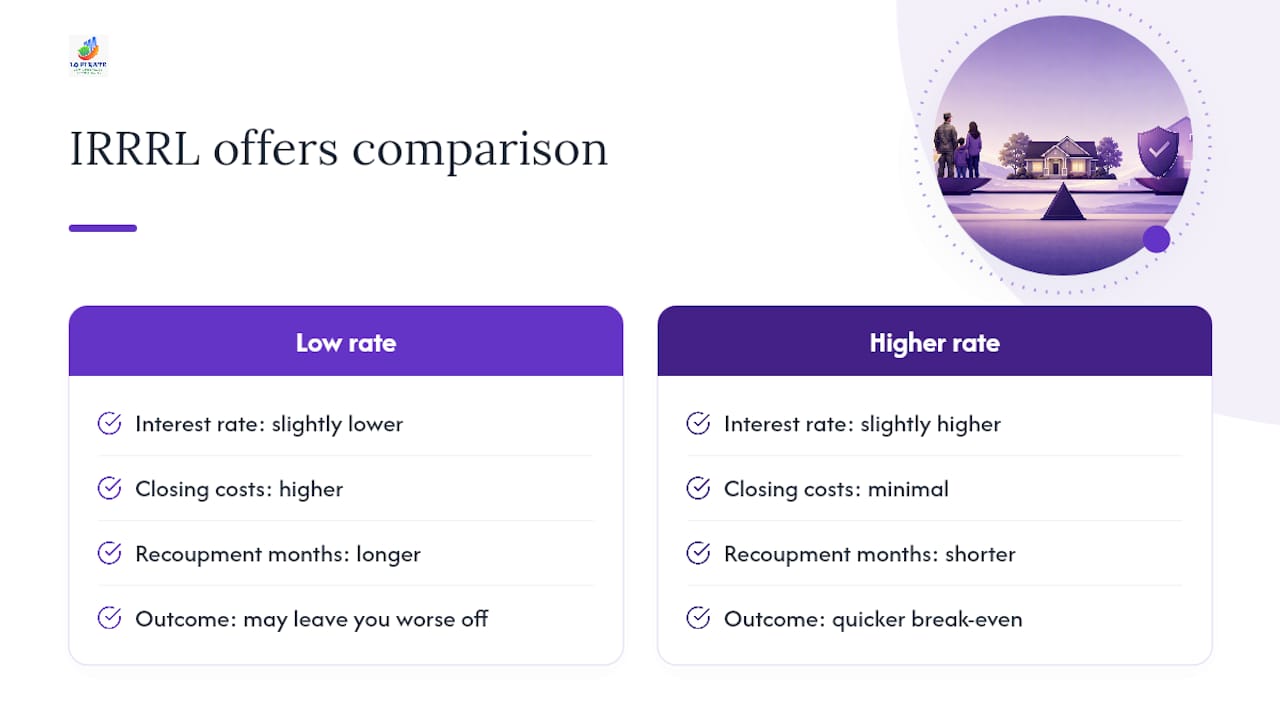
The bigger blind spot: veterans rarely shop lenders for an IRRRL the way they would for a purchase loan, assuming the streamline process means there's nothing to compare. That's backwards. Overlays mean two lenders can offer meaningfully different terms on the exact same VA program, and the only way to find that out is to get quotes from more than one.
If you take one thing from this, prioritize the comparison statement over the sales pitch. Ask for it in writing, read the recoupment months, and don't sign until the number makes sense for how long you plan to stay in the house.
Compare IRRRL Offers Through Lofirate's Broker Network
Retail lenders quote you their own pricing. Wholesale brokers shop multiple lenders at once, which is exactly the kind of comparison this article just told you to do before signing an IRRRL.

Lofirate connects you with licensed wholesale mortgage brokers who can pull competing IRRRL offers, each with its own NTB documentation and recoupment math, so you're not relying on one lender's version of "the best deal." Before you request a match, have your COE and recent mortgage statements ready. Once matched, ask each broker for the same comparison statement and break-even numbers this article walks through, so you're judging offers on equal footing rather than guessing which lender's overlay policy actually fits your credit profile.
Start by requesting a no-obligation broker match through Lofirate's services page, or browse loan options if you're still deciding between an IRRRL and a different refinance path.

Frequently Asked Questions
Can I get cash back from a VA IRRRL refinance? No. An IRRRL is a rate-and-term refinance only. If you need cash for debt payoff or home repairs, you'd need a VA cash-out refinance, which has different underwriting requirements and costs.
Do I need a new appraisal for a VA streamline refinance? Usually not. VA's IRRRL program is designed to skip a new appraisal and credit underwriting in most cases, though individual lenders can still impose their own requirements.
What happens if my current VA loan is past due? If your loan is 30 days or more delinquent, VA requires prior approval before the IRRRL can close, which means extra documentation and a longer timeline than the typical streamline process.
Is a higher interest rate ever acceptable on an IRRRL? Yes, in specific cases. Converting an adjustable-rate mortgage to a fixed rate, shortening your loan term, or removing a co-borrower can qualify as a net tangible benefit even without a rate drop.
How long does the VA IRRRL refinance process typically take? Once your loan seasoning requirement is met and your paperwork is in order, most IRRRLs close faster than a standard refinance since there's usually no appraisal wait, though exact timing varies by lender workload and documentation needs.
Sources
- Interest Rate Reduction Refinance Loan | Veterans Affairs
- Veterans Benefits Administration Circular 26-19-22