
Most lenders want to see a DSCR of at least 1.00, meaning your rental income covers the mortgage payment dollar for dollar, though the strongest pricing typically applies to ratios above 1.20. Three factors decide most approvals: the DSCR ratio itself, your credit score paired with how much equity you're putting down, and whether you have enough cash reserves left over after closing. Get those three right, and the rest of the file is mostly paperwork. A broker matching service can help route a marginal file to the lender most likely to say yes.
TL;DR:
- While lenders advertise DSCR minimums as low as 0.75, the best pricing and widest lender options generally require ratios above 1.20.
- Realistic approval for competitive rates typically demands a credit score of 680 to 700+ and a down payment of at least 20% to 25%, depending on DSCR.
- Proper documentation includes signed leases or rent rolls, 12 months of short-term rental income records if applicable, and an appraisal with market rent estimates.
- For properties beyond four units or with mixed commercial elements, standard DSCR loans no longer apply, requiring commercial or bridge financing.
- Shopping multiple lenders through a broker platform can significantly improve approval odds and rates for complex files, especially involving LLCs, short-term rentals, or low DSCR ratios.
Table of Contents
- DSCR Loan Requirements at a Glance
- How to Calculate DSCR (Formula and Example)
- Rental Income Documentation: Leases, Appraisals, and STR Income
- Eligible Property Types: Condos, Multi-Unit, and When to Go Commercial
- Application Checklist and Realistic Closing Timeline
- How to Choose a DSCR Lender or Broker
- 2026 Underwriting Trends: What Investors Should Do Now
- Get Matched With a DSCR Lender Through Lofirate
- Useful Sources for Verifying DSCR Loan Rules
- FAQ
DSCR Loan Requirements at a Glance
Program guidelines and actual lender behavior aren't the same thing. A lender's website might advertise a DSCR floor of 0.75, but the loans that actually close and price well tend to cluster much higher.
- DSCR ratio: Advertised floors run as low as 0.75 to 1.00, but 1.20+ typically unlocks the best rate tiers and widest lender pool.
- Credit score: Programs often list 620 as a minimum, though realistic approval at competitive pricing usually needs 680 to 700+, since many lenders layer overlays on top of the stated program floor.
- Down payment / LTV: Expect 20% to 25% down (75% to 80% LTV) for DSCR above 1.0, and often 25% to 30% down when DSCR dips below 1.0.
- Reserves: Most lenders want 3 to 6 months of PITIA in liquid or near liquid accounts, sometimes more for lower credit scores or multiple financed properties.
These numbers shift lender to lender and even file to file, which is exactly why shopping a scenario across multiple wholesale channels tends to matter more with DSCR loans than with conventional financing.
How to Calculate DSCR (Formula and Example)
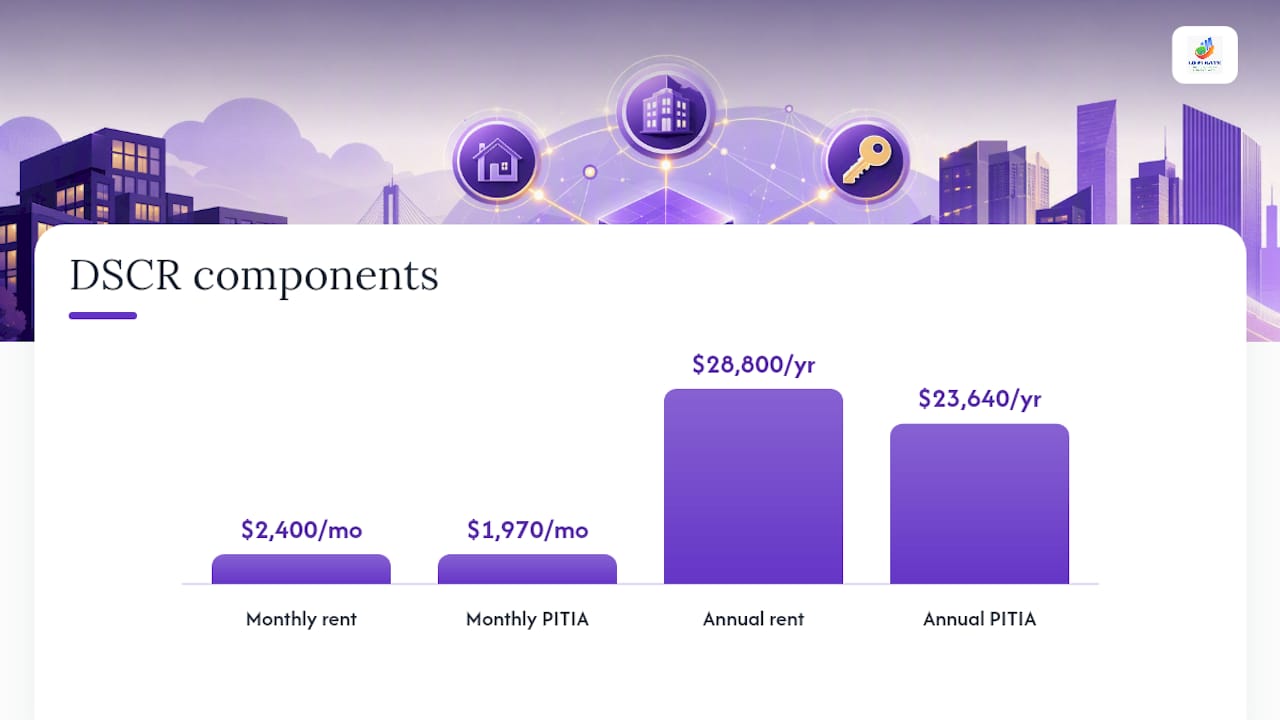
DSCR is a simple fraction: gross monthly rental income divided by PITIA, the full monthly housing payment. PITIA stands for principal, interest, taxes, insurance, and association dues if the property has an HOA.
Here's how a lender typically works through it:
- Pull the qualifying rent, either from the signed lease or the appraiser's market rent opinion, whichever the lender's guidelines call for.
- Add up PITIA: principal and interest on the new loan, property taxes, homeowners insurance, and HOA dues if applicable.
- Divide rent by PITIA to get the ratio.
Worked example: A rental generates $2,400 a month in lease income. The proposed loan carries $1,600 in principal and interest, $250 in taxes, $120 in insurance, and no HOA. PITIA totals $1,970. Divide $2,400 by $1,970 and you get a DSCR of roughly 1.22, comfortably above the 1.20 threshold most lenders treat as their pricing sweet spot.
Some lenders annualize both sides of the equation instead of running it monthly, which produces the same ratio but can matter for how they treat seasonal short term rental income.
Rental Income Documentation: Leases, Appraisals, and STR Income
Underwriters won't take your word for what a property rents for. They want paper, and what counts as acceptable paper depends on whether the unit is long-term or short-term rental.
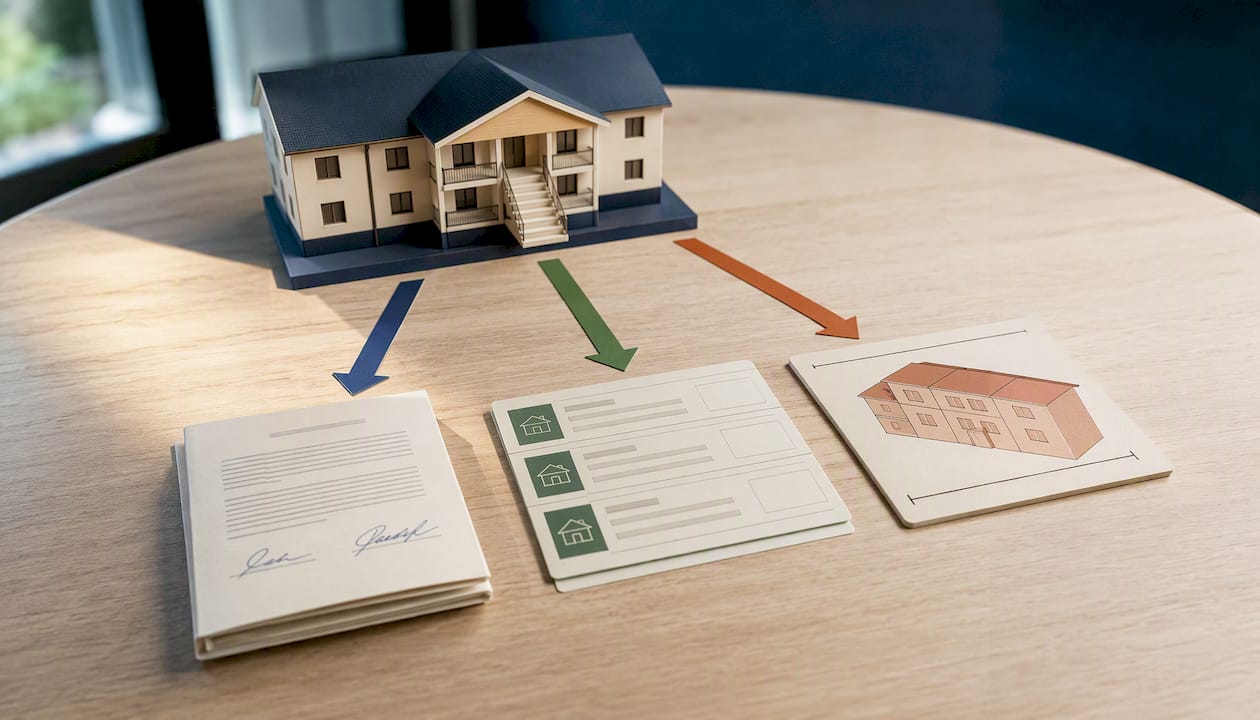
For a standard long-term rental, lenders generally accept a signed lease, a rent roll for multi-unit properties, or the appraiser's Form 1007 market rent opinion when the unit is vacant or between tenants. Underwriters scrutinize lease start and end dates, look for arms-length language confirming the tenant isn't a relative or business partner, and check that signatures match the names on the property.
Short-term rentals get treated differently. Instead of a lease, lenders lean on booking platform data or AirDNA market projections, plus 12 months of trailing income history when the property has an operating track record. New STR conversions with no history usually get underwritten off projected market rent, often at a discount to account for occupancy risk.
Before you apply, assemble:
- Signed lease(s) or rent roll for every unit
- 12 months of STR booking history and payout statements, if applicable
- Insurance binder showing coverage matches the loan amount
Pro Tip: Order the appraisal with market rent (Form 1007 or 1025 for multi-unit) even if you already have a signed lease. Underwriters frequently use the lower of the two figures, and having both on file prevents a mid-underwriting scramble.
Eligible Property Types: Condos, Multi-Unit, and When to Go Commercial
DSCR loans through residential wholesale channels generally cover single-family homes, 2 to 4 unit properties, warrantable condos, and condotels in some cases. Non-warrantable condos still qualify with plenty of lenders, just at a lower LTV and sometimes a rate bump.
- Single-family rentals: The most straightforward DSCR product, widest lender selection, best pricing.
- 2 to 4 unit properties: Treated similarly to SFRs but rent rolls from all units factor into the DSCR calculation.
- Warrantable condos: Fully eligible; non-warrantable condos qualify through specific lenders willing to underwrite the HOA and building.
- Short-term rentals: Eligible at most DSCR lenders now, though expect income haircuts and sometimes a slightly higher rate.
Once you move past four units, or the property involves mixed commercial and residential space, standard residential DSCR products stop applying. That's when you need a small balance commercial lender or a bridge lender built for larger multi-family and mixed-use deals, where underwriting looks more like a commercial real estate loan than a residential mortgage.
Application Checklist and Realistic Closing Timeline
DSCR loans close faster than conventional loans in theory, since there's no personal income to verify, but the file still moves through appraisal, title, and underwriting like any mortgage.
- Lease documentation or rent roll for every unit, plus STR history if relevant.
- Appraisal with market rent (Form 1007 for single units, 1025 for 2 to 4 units), ordered as early as possible since appraiser scheduling is often the longest bottleneck.
- Title commitment, especially important when the property is closing into an LLC and title needs to confirm the entity's authority to hold real estate.
- Entity documents if closing in an LLC: articles of organization, operating agreement, and EIN letter.
- Bank statements, typically two months, to verify reserves and confirm the down payment source.
- Insurance binder matching the loan amount and lender requirements.
Most DSCR loans generally close faster than conventional loans and often complete within a few weeks once the file is complete. The most common delays are a slow appraisal turnaround, incomplete LLC paperwork, or title needing extra time to clear on an entity-vested property. Ordering the appraisal the day you go under contract, and getting your entity documents organized before you apply, shaves real time off the timeline. Working with a broker who pre-vets your file for entity and reserve issues before submission tends to catch these snags earlier than a direct lender's overworked processing queue.
How to Choose a DSCR Lender or Broker
The right channel depends on how clean your file is, not just which lender advertises the lowest rate. A borrower with sub 1.0 DSCR, an LLC closing, or a short-term rental with thin booking history needs a lender whose overlays actually fit that scenario, and that's a much smaller pool.
- Direct lenders can be fast and simple for clean, high-DSCR files, but they only quote their own program.
- Wholesale brokers shop the same file across multiple lenders simultaneously, which matters most when your DSCR, credit, or property type sits outside the mainstream box.
- Aggregators and broker platforms widen the net further, since comparison shopping across wholesale channels tends to surface pricing and programs a single direct lender won't offer.
Complex files, foreign national borrowers, and properties with a DSCR under 1.0 are exactly where shopping multiple lenders at once pays off, because each lender's overlays shift by scenario in ways that aren't obvious from a rate sheet alone.
Pro Tip: If your DSCR lands between 0.95 and 1.10, get at least three quotes before committing. That range is where lender overlays diverge the most, and the pricing spread between lenders can run half a point or more.
2026 Underwriting Trends: What Investors Should Do Now
Lender overlays have tightened. Credit and reserve requirements that used to flex have hardened into firmer minimums at many shops, even though program guidelines on paper haven't changed much. At the same time, the rate gap between DSCR and conventional financing has compressed to roughly 70 to 120 basis points in 2026, narrower than investors saw a few years back, though borrowers with clean personal income files still generally price better on conventional loans.
Three moves make sense in this environment. Run your DSCR conservatively, using haircut rent rather than optimistic lease numbers, so you're not surprised by an appraiser's lower market rent opinion. Assemble your reserves and lease documentation before you shop, not after a lender asks for them. And for anything outside a plain-vanilla SFR at 1.20+ DSCR, use broker matching instead of applying at one shop and hoping. Pricing on these loans varies enough by lender that shopping per file, not just once a year, is worth the extra hour it takes.
— LoFi
Get Matched With a DSCR Lender Through Lofirate
A broker matching platform connects you with licensed wholesale mortgage brokers who shop your DSCR scenario across multiple lenders instead of quoting just one program. That matters most exactly where this article kept flagging friction: LLC-vested purchases, short-term rental income with thin history, sub-1.0 DSCR files, and foreign national borrowers, where the difference between lenders' overlays can swing your approval odds and your rate.

Because the platform doesn't lend directly, there's no pressure to force your file into one lender's box. You get connected with a broker licensed in your state, review your numbers together, and decide whether to move forward, with no obligation either way. If you're weighing DSCR against conventional financing for an upcoming purchase or refinance, or you're just not sure which loan option fits your investor loan program needs, get matched with a broker and get a real answer on your file rather than a generic rate sheet.
Useful Sources for Verifying DSCR Loan Rules
Check mortgage rules at Consumerfinance, rate trends via the FRED mortgage series, and lender licensing at Nmlsconsumeraccess.
FAQ
What Qualifies You for a DSCR Loan?
You generally need a DSCR at or near 1.00 or higher, credit score usually needs to be 680 to 700 or better, 20% to 25% down, and several months of PITIA in reserves; files below 1.0 DSCR still qualify at many lenders but with tighter pricing and larger down payments.
Can You Get a DSCR Loan Under $100,000?
Some lenders do offer DSCR loans on smaller balances, but the pool shrinks considerably since many wholesale investors set minimum loan amounts, so working with a broker who knows which lenders accept smaller balances saves time.
Are All DSCR Loans 20% Down?
No.
Can an LLC Get a DSCR Loan?
Yes, closing in an LLC is one of the main reasons investors choose DSCR financing, and most DSCR lenders accept LLC vesting as long as you provide entity formation documents, an operating agreement, and an EIN letter during underwriting.