
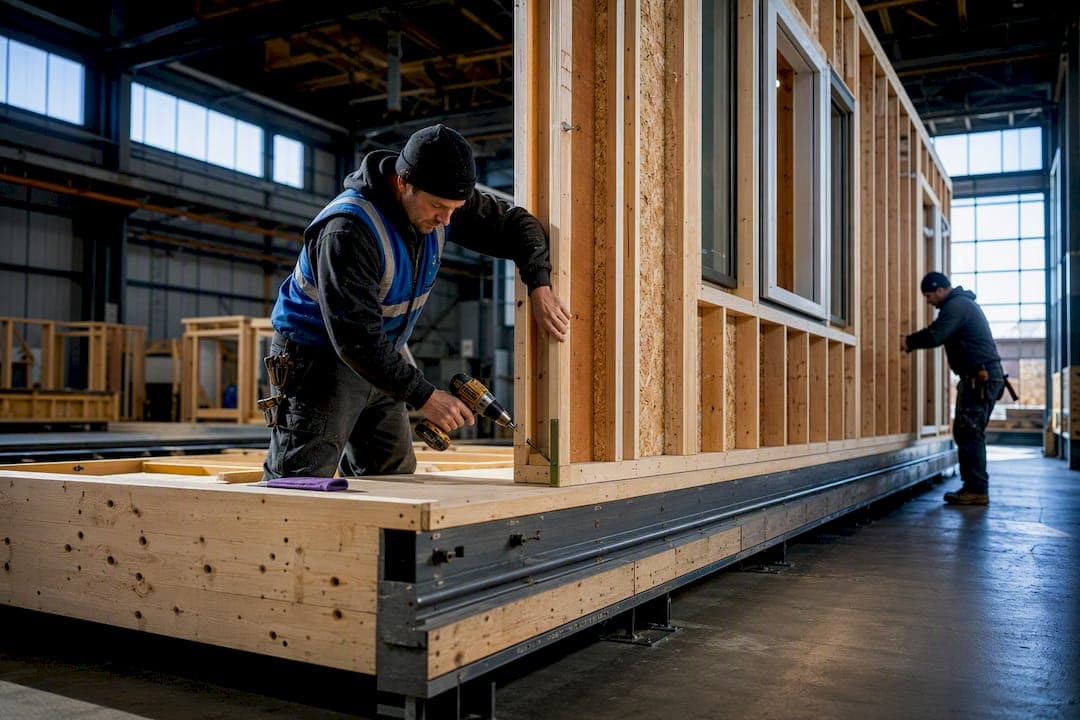
Yes, you can get a standard mortgage for a modular home, as long as it sits on a permanent foundation and meets state or local building code. Buying a finished, titled modular home means shopping for a regular mortgage preapproval, the same way you would for a site-built house. Building one means you need a construction-to-permanent loan instead. The platform connects buyers with licensed wholesale mortgage brokers who know the difference between the two paths.
TL;DR:
- Modular homes built to state and IRC codes on a permanent foundation generally qualify for the same financing options as site-built houses, including conventional, FHA, VA, and USDA loans.
- Construction-to-permanent loans for building a modular home require higher down payments, typically between 10 and 20 percent, due to the increased risk during construction.
- Appraisers must be experienced with modular properties and comparable sales rules, as inaccurate appraisals can delay or lower home valuations during loan processing.
- Working with a lender knowledgeable about modular construction helps prevent misclassification, especially avoiding chattel loans that have higher rates and shorter terms.
- The Lofirate platform connects buyers with brokers experienced in modular financing, ensuring better loan options and guidance through complex requirements.
Table of Contents
- Modular Home Mortgage Options: Which Program Fits Your Situation
- How Construction-to-Permanent Loans Work for Modular Builds
- Property and Documentation Requirements for Modular Mortgages
- What a Modular Home Costs and How Long It Takes to Finance
- How to Shop for a Modular-Friendly Lender
- Why Broker Matching Makes Sense for Modular Buyers
- Get Matched With a Broker Who Knows Modular Financing
- Sources
- FAQ
Modular Home Mortgage Options: Which Program Fits Your Situation
A modular home built to state and IRC code, permanently attached to its foundation, and titled as real property qualifies for the same financing lineup as any site-built house: conventional, FHA, VA, and USDA loans. Fannie Mae's Selling Guide B2-3-02 spells out the appraisal and titling rules that make this possible, and the Modularhomes confirms lenders treat these homes like conventional real estate once foundation and code boxes are checked.
Here's how the main programs stack up:
- Conventional loans: Some programs allow 3 to 5% down, but private mortgage insurance applies until you reach 20% equity. A moderate credit score gets you in the door; higher scores usually unlock better pricing.
- FHA loans: 3.5% down with a credit score as low as 580, per Home Nation's modular financing breakdown. FHA 203(b) financing applies once the modular home is complete and meets HUD's property standards, but it must be your primary residence, and mortgage insurance premiums run for the life of the loan in most cases.
- VA loans: Zero down for eligible veterans and service members, offset by a funding fee. Occupancy rules and appraisal standards apply just as they would for any VA purchase.
- USDA loans: Zero down in eligible rural census tracts, with income limits tied to area median income. Check property eligibility before you fall in love with a lot, because plenty of "rural-feeling" land doesn't qualify.
One trap catches new modular buyers off guard: chattel loans. If a modular home isn't permanently affixed and titled as real property, some lenders will only offer chattel financing, which behaves more like a vehicle loan. Rates run higher and terms run shorter. Pasha Funding's guide to modular financing is blunt about this: a finished modular on a permanent foundation should never be steered into chattel territory. If a lender pushes that route for a home that clearly meets real-property criteria, that's your cue to call a different lender. Reviewing loan options built around purchase and refinance scenarios before you start shopping helps you spot the mismatch early.
How Construction-to-Permanent Loans Work for Modular Builds
If you're building rather than buying finished, a construction-to-permanent (C2P) loan bridges the factory build and the final mortgage in one package. Most buyers prefer the single-close version: one application, one set of closing costs, one rate lock strategy, instead of financing the build separately and then refinancing into a permanent mortgage once the home is done. Fewer closings mean fewer fees and less exposure to rate swings between construction and move-in.
Lenders typically ask for more skin in the game on C2P loans. Down payment and reserve requirements commonly land in the 10 to 20% range, according to SmartHouseFinance's overview of modular financing, higher than what you'd see on a standard purchase mortgage. That overlay exists because construction carries more risk than buying a finished home. The lender is underwriting a home that doesn't exist yet.
The typical C2P sequence looks like this:
- Lender approves a fixed-price contract with your builder or manufacturer.
- Funds release in draws as the factory build progresses and the home is set and finished on site, with interest-only payments during that phase.
- The permanent rate gets set or locked, sometimes with a float-down option if market rates drop before completion.
- At final inspection and certificate of occupancy, the loan converts automatically into a standard mortgage.
Lenders also want an as-complete appraisal, meaning the appraiser values the home as if it's already finished, based on plans and comparables.
Pro Tip: Ask your lender about rate lock extensions before you sign anything. Builds get delayed by weather, permitting, or supply issues, and an expired lock can force you into a worse rate right when you're closest to the finish line.
Property and Documentation Requirements for Modular Mortgages
Underwriters need proof that your modular home counts as real property, not personal property. That distinction determines which loan programs are even on the table.
The non-negotiables:
- A permanent foundation, with transport hardware (axles, wheels, tow hitches) removed after the home is set.
- Titling as real property under your state's rules, which usually means surrendering the manufacturer's certificate of origin and recording the home with the land.
- Full compliance with state and local building codes, verified through inspections and the manufacturer's data plate or insignia, is crucial according to Permis de Construire Autorisation de construire.
Appraisals are where modular deals most often stall. You want an appraiser who has handled modular properties before and understands which comparables apply. For homes under Fannie Mae's MH Advantage program, appraisers may need to pull from a limited pool of similar modular sales, though Fannie Mae's own guidance allows site-built comps when modular comps are scarce. An appraiser unfamiliar with that rule can undervalue the home or delay the report while they figure it out.
Program-specific paperwork adds another layer. FHA loans require the home to meet HUD's Minimum Property Standards. VA loans apply Minimum Property Requirements with their own inspection checklist. USDA loans require both tract eligibility and income documentation tied to your household size and location.
Title and land issues cause more delays than almost anything else in modular closings, according to SmartHouseFinance. Easements, unresolved liens, or land you don't yet fully own can stall underwriting for weeks. Order a survey and title search early, before you're racing a rate lock deadline. Working through a documentation checklist for loan approval ahead of time catches most of these issues before they become closing-day emergencies.
What a Modular Home Costs and How Long It Takes to Finance
Budgeting for a modular home means separating three buckets: the home itself, the site work, and the financing costs layered on top. The installed price of the home covers factory construction, transport, and setting it on the foundation. Site work, meaning grading, utility hookups, driveways, septic or sewer connections, and the foundation itself, gets quoted separately and varies enormously by lot.
Plan for these costs on top of the home price:
- Closing costs, typically similar to those for standard mortgages.
- Appraisal and inspection fees, sometimes higher if a specialized modular appraiser is required.
- A contingency fund of 5 to 10% of total project cost, because site surprises (rock, drainage, permitting delays) are common.
On the rate side, Home Nation's 2026 financing guide points to Freddie Mac's Primary Mortgage Market Survey showing 30-year fixed rates in the mid-to-high single-digit percentage range for a reported week in 2026. Your actual quote depends heavily on credit score, down payment, and program, so treat that figure as a market backdrop, not a personal quote.
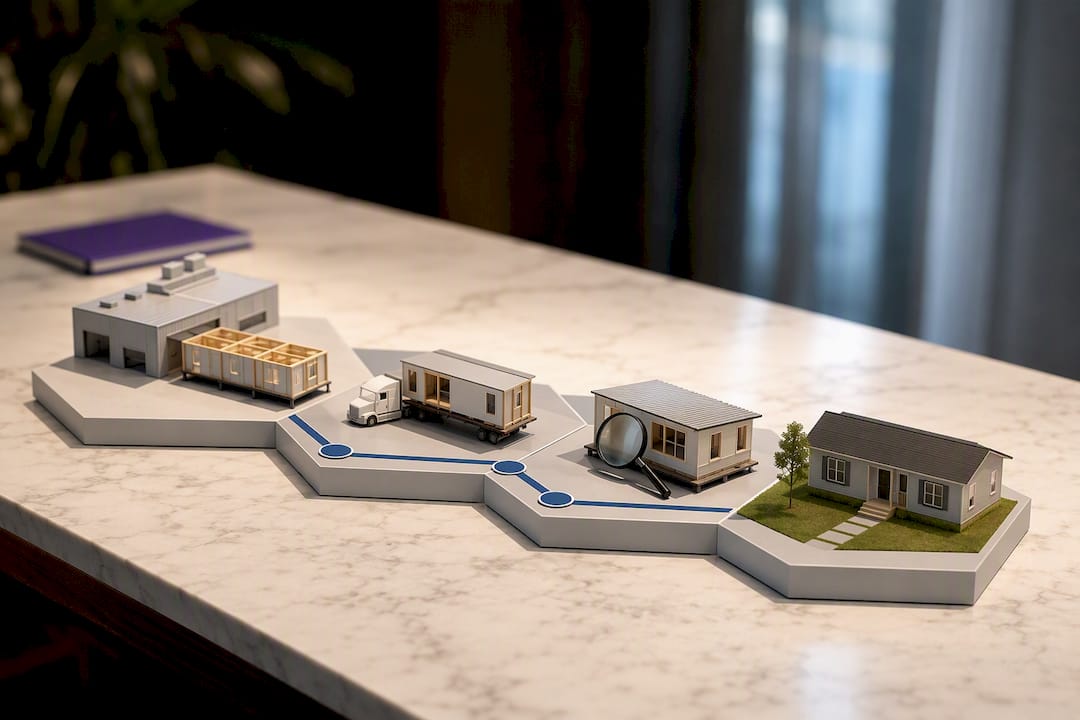
Timeline follows the build stages: factory production, transport and setting, inspections, and final certificate of occupancy. Each stage triggers a draw if you're using a C2P loan, and locking your permanent rate to one of these milestones, rather than an arbitrary date, tends to reduce extension fees.
How to Shop for a Modular-Friendly Lender
Not every loan officer has closed a modular deal. Vetting for experience upfront saves weeks later.
- Ask directly: how many modular closings has this lender handled recently, and do they offer construction-to-permanent products?
- Confirm they understand your state's modular insignia and code requirements, and that their go-to appraisers do too.
- Get preapproved before you sign a builder contract, so you know your budget ceiling.
- Have your builder or manufacturer send their contract for lender review early, since financing terms often hinge on contract structure.
- Once the lender confirms C2P capability, order the appraisal and survey, then schedule your rate lock around a real construction milestone.
Gather your documentation while you shop: pay stubs, two years of tax returns, bank statements, the builder's fixed-price contract, the plant or state insignia, and site plans. A mortgage qualification walkthrough covers what underwriters expect in more detail.
One red flag deserves repeating: if a lender insists on a chattel loan for a home that will sit on a permanent foundation and be titled as real property, that lender either doesn't understand modular classification or isn't set up to handle it. Move on.
Why Broker Matching Makes Sense for Modular Buyers
Modular financing has more moving parts than a standard purchase: foundation requirements, appraisal comparables, C2P draw schedules, state insignia rules. A lender who's never closed a modular deal will hesitate, misclassify the property, or quote conservative terms just to cover their own uncertainty.
The service connects borrowers with licensed wholesale mortgage brokers nationwide who shop multiple lenders on their behalf. That matters here specifically because broker shopping surfaces lenders who already have modular experience, rather than leaving you to discover a lender's inexperience mid-underwriting. This service does not originate loans directly. It matches borrowers with a broker for a transparent, no-obligation consultation.
— LoFi
Get Matched With a Broker Who Knows Modular Financing
Modular financing rewards borrowers who shop around, and This platform aims to simplify comparison shopping by connecting borrowers with licensed wholesale brokers who check multiple lenders for competitive rate options and modular experience.

The consultation is free and comes with no obligation to move forward. If you're building, ask specifically about construction-to-permanent capability and appraisal experience with modular comparables. If you're buying finished, a broker can confirm which program fits your credit profile and down payment. Visit Lofirate's services page to request a broker match, or browse loan options first if you're still comparing conventional, FHA, VA, and USDA paths side by side.
Sources
Program rules cited above come from Fannie Mae's Selling Guide and HUD's FHA 203(b) modular guidance.
This article is general information, not a substitute for advice from a qualified financial advisor. Consult a qualified financial professional about your own circumstances before acting on anything here.
- Manufactured home financing — Fannie Mae
- Modularhomes
- Modular Home Loans: Complete Financing Guide for 2026 — Home Nation
- Modular home financing options — Pasha Funding
FAQ
Can You Get a Conventional Mortgage for a Modular Home?
Yes. A modular home on a permanent foundation, built to state and IRC code, and titled as real property qualifies for conventional financing the same way a site-built home does.
Is a Modular Home Mortgage Different From a Manufactured Home Loan?
Yes. Manufactured homes built to the federal HUD code can face chattel financing if not titled as real property, while modular homes built to state and IRC code typically finance like site-built houses once permanently attached.
How Much Down Payment Does a Modular Home Need?
It depends on the program: conventional loans can start around 3 to 5% down, FHA requires 3.5%, VA and USDA offer 0% down for eligible borrowers, and construction-to-permanent loans commonly require 10 to 20%.
Do I Need a Special Appraiser for a Modular Home?
You need an appraiser familiar with modular properties and comparable sales rules, since an inexperienced appraiser can undervalue the home or delay the report by not knowing when site-built comps are permitted.
How Does Lofirate Help With Modular Home Financing?
Lofirate connects you with licensed wholesale mortgage brokers who shop multiple lenders, including those with construction-to-permanent experience and modular appraisal familiarity, through a free, no-obligation consultation.