

Many first-time homebuyers believe a perfect credit score is the only path to mortgage approval. This misconception keeps countless qualified borrowers from exploring their options. The reality is that mortgage qualification involves multiple factors working together, and understanding these elements empowers you to navigate the process confidently. This guide breaks down the qualification criteria lenders use in 2026, explains how different loan types affect your eligibility, and shows how wholesale brokers can help you access competitive rates while simplifying your home financing journey.
Table of Contents
- Understanding Mortgage Qualification Basics
- Comparing Mortgage Qualification Requirements Across Different Loan Options
- How Wholesale Brokers Help You Qualify And Secure Better Mortgage Rates In 2026
- Tips To Improve Your Mortgage Qualification Chances In 2026
- Explore Competitive Mortgage Rates With LO FI RATE
Key takeaways
| Point | Details |
|---|---|
| Multiple qualification factors | Lenders evaluate credit score, income stability, debt ratios, and documentation together, not just one perfect number. |
| Loan types vary widely | FHA, conventional, VA, and USDA loans each have different credit and down payment requirements that affect your eligibility. |
| Wholesale brokers expand access | Brokers connect you to multiple lenders simultaneously, increasing your chances of finding competitive rates and approval. |
| Preparation improves outcomes | Organizing documents, reducing debts, and monitoring credit before applying significantly strengthen your qualification profile. |
Understanding mortgage qualification basics
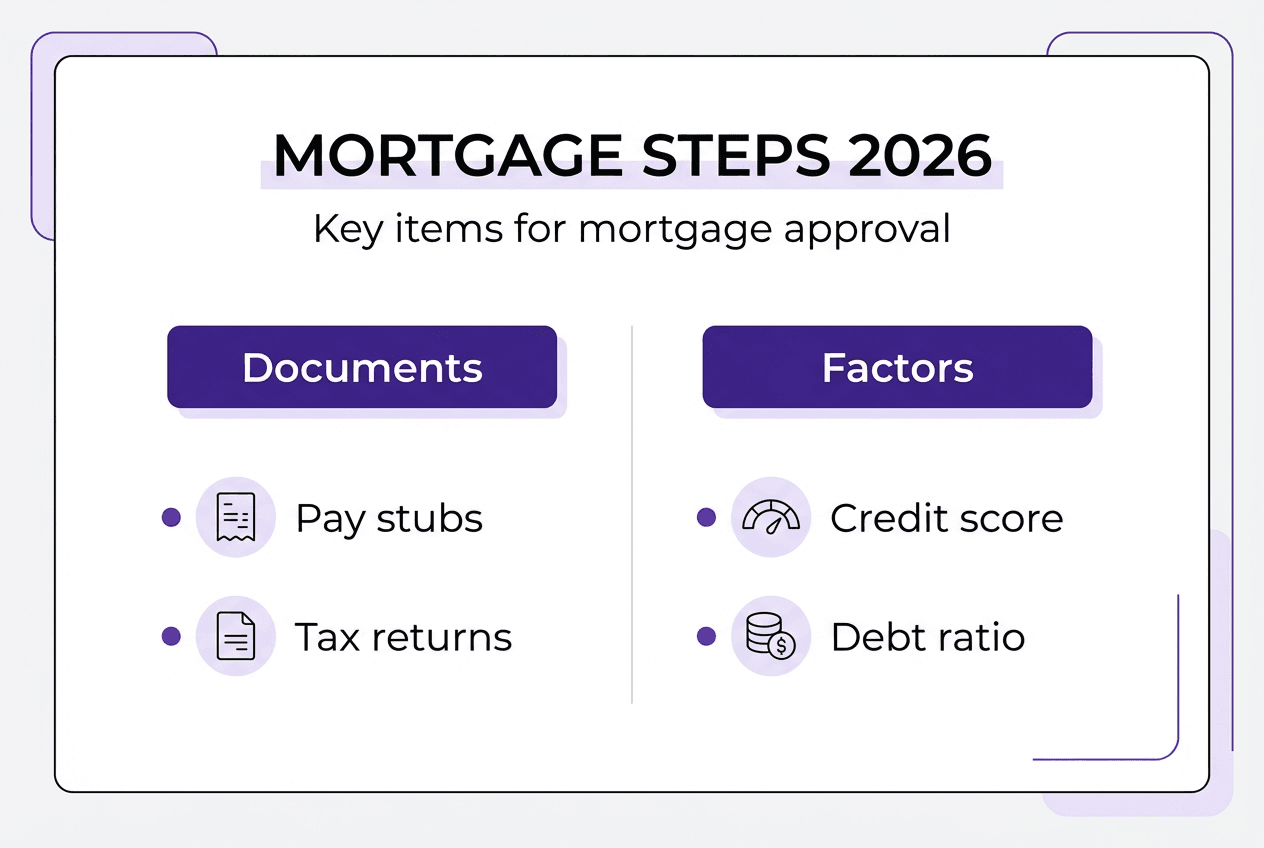
Mortgage qualification primarily depends on credit score, income, debt to income ratio, and document verification. Lenders use these four pillars to assess your ability to repay a home loan and determine what terms they can offer you.
Your credit score serves as a financial snapshot that lenders review first. Most conventional loans require a minimum score of 620, though some government-backed programs accept lower scores. Higher scores unlock better interest rates because they signal lower risk to lenders. Each 20 point increase in your credit score can reduce your monthly payment by meaningful amounts over a 30 year mortgage.
Income verification proves you have steady earnings to cover monthly payments. Lenders typically want to see two years of consistent employment history, though self-employed borrowers may need additional documentation. They calculate your gross monthly income and compare it against your proposed housing payment to ensure affordability. Pay stubs, W2 forms, and tax returns form the core of this verification process.
The debt to income ratio measures your monthly debt obligations against your gross monthly income. Lenders divide your total monthly debts by your gross monthly income to calculate this percentage. Most programs prefer ratios below 43%, though some allow up to 50% with compensating factors like substantial savings or excellent credit. This ratio helps lenders determine if you can comfortably manage a mortgage alongside existing obligations.
Document preparation separates smooth applications from delayed ones. You'll need recent pay stubs, two years of tax returns, bank statements showing assets, and identification documents. Self-employed borrowers should prepare profit and loss statements and business tax returns. Having these organized before you apply accelerates the approval timeline significantly.
Common myths create unnecessary barriers for qualified borrowers. Many believe they need 20% down for every loan type, but numerous programs accept much less. Others think a single late payment disqualifies them permanently, when lenders actually review overall patterns rather than isolated incidents. Understanding these realities helps you approach qualification with accurate expectations.
Pro Tip: Start monitoring your credit six months before applying to identify and correct any errors that could lower your score unnecessarily.
Comparing mortgage qualification requirements across different loan options
Different loan options have varying qualification requirements impacting first-time buyer eligibility. Understanding these differences helps you target the program that matches your financial profile and maximizes your approval chances.
Conventional loans represent the most common mortgage type for borrowers with solid credit and income. These loans typically require credit scores of 620 or higher and down payments starting at 3% for first-time buyers. Debt to income ratios usually cap at 43%, though some lenders accept higher ratios with strong compensating factors. Conventional loans offer flexibility in property types and don't require upfront mortgage insurance premiums.
FHA loans serve borrowers with lower credit scores or smaller down payments. The Federal Housing Administration insures these loans, allowing lenders to accept credit scores as low as 580 with 3.5% down. Borrowers with scores between 500 and 579 may still qualify with 10% down. FHA loans allow debt to income ratios up to 50% in many cases, making them accessible for borrowers with existing debts. The tradeoff involves mandatory mortgage insurance premiums for the loan's life unless you refinance later.
VA loans provide exceptional terms for eligible veterans, active duty service members, and qualifying spouses. These loans require no down payment and no mortgage insurance, offering significant savings over other options. Credit score requirements vary by lender, but many accept scores around 620. The VA doesn't set a maximum debt to income ratio, though individual lenders typically prefer ratios below 41%. Borrowers pay a one-time funding fee instead of ongoing mortgage insurance.
USDA loans target rural and suburban homebuyers in eligible areas. These loans require no down payment and accept credit scores around 640. Income limits apply based on household size and location, restricting eligibility to moderate-income borrowers. Debt to income ratios typically max out at 41%. Properties must meet location requirements and serve as primary residences.
| Loan Type | Min Credit Score | Min Down Payment | Max DTI Ratio | Mortgage Insurance |
|---|---|---|---|---|
| Conventional | 620 | 3% | 43% | Required below 20% down |
| FHA | 580 | 3.5% | 50% | Required for loan life |
| VA | 620 (varies) | 0% | 41% (varies) | None (funding fee applies) |
| USDA | 640 | 0% | 41% | Required upfront and annual |
Pro Tip: Match your loan type to your financial strengths rather than forcing yourself into a conventional loan if another program better suits your situation.
How wholesale brokers help you qualify and secure better mortgage rates in 2026
Wholesale brokers enable borrowers to compare multiple competitive rates from various lenders efficiently. Unlike retail lenders who offer only their own products, wholesale brokers access multiple lender networks simultaneously, expanding your options significantly.
Wholesale mortgage brokers act as intermediaries between borrowers and wholesale lenders. They don't lend money directly but instead match your qualification profile with lenders most likely to offer favorable terms. This structure allows them to shop your application across numerous lenders without you needing to complete multiple applications. Brokers earn compensation from lenders, though regulations require transparent disclosure of all fees.
The broker process begins with a comprehensive financial review. Your broker collects information about your income, debts, assets, and credit profile to understand your qualification strength. They analyze which loan programs and lenders align best with your situation. This personalized matching increases approval odds because brokers know which lenders specialize in specific borrower profiles.

Brokers submit your scenario to multiple wholesale lenders simultaneously. Each lender reviews your information and returns rate quotes and terms they can offer. Your broker compares these options side by side, highlighting differences in rates, fees, and program features. This competitive process often results in better pricing than approaching a single retail lender directly.
Rate advantages through brokers stem from wholesale pricing structures. Wholesale lenders offer lower rates to brokers than retail banks charge direct consumers. Brokers can pass these savings to you while still earning their compensation from the lender. The competitive bidding process among lenders further drives rates down as they compete for your business.
Borrowers working with wholesale brokers in 2026 report finding rates averaging 0.25% to 0.50% lower than initial retail bank quotes, translating to thousands in savings over a mortgage's life.
- Gather your financial documents including pay stubs, tax returns, and bank statements before contacting a broker.
- Be transparent about your complete financial picture so your broker can match you with appropriate lenders.
- Ask your broker to explain rate quotes in detail, including all fees and closing costs beyond just the interest rate.
- Request rate locks in writing once you find favorable terms to protect against market increases during processing.
- Stay responsive throughout the process by promptly providing any additional documentation lenders request.
Tips to improve your mortgage qualification chances in 2026
Improving credit and reducing debt significantly increase mortgage qualification success. Taking proactive steps before applying strengthens your profile and expands your loan options considerably.
Credit repair should start six months before you plan to apply. Review your credit reports from all three bureaus for errors and dispute any inaccuracies immediately. Pay down credit card balances to below 30% of your limits, as utilization ratios heavily impact scores. Avoid closing old accounts even if you don't use them, since length of credit history matters. Set up automatic payments to prevent any missed payments during your preparation period.
Reducing consumer debts directly improves your debt to income ratio. Focus on paying off small balances completely to eliminate monthly obligations from your ratio calculation. Consider consolidating high interest debts to lower your monthly payments, though be cautious about extending repayment terms unnecessarily. Student loan payments count in your ratio, so income-driven repayment plans that lower monthly amounts can help qualification.
Document organization prevents application delays and demonstrates financial responsibility. Create a folder with two years of tax returns, recent pay stubs, and three months of bank statements. Self-employed borrowers should prepare profit and loss statements and business tax returns. Gather documentation for any non-employment income like investments or rental properties. Having everything ready shows lenders you're serious and organized.
Employment stability reassures lenders about your income continuity. Avoid changing jobs during the application process if possible, as new employment can trigger additional verification requirements. If you must change jobs, staying in the same industry at equal or higher pay minimizes concerns. Lenders view two years in the same field as stable even with employer changes.
Pro Tip: Avoid making large purchases or opening new credit accounts in the six months before applying, as these actions can lower your score and increase your debt ratio.
Common pitfalls derail otherwise qualified borrowers unnecessarily. Don't co-sign loans for others during your qualification period, as these obligations count against your debt ratio. Avoid depositing large cash amounts into your bank accounts, since lenders must verify the source of all funds. Don't make major financial changes like switching from W2 employment to self-employment right before applying. Maintaining stability across all financial areas keeps your application straightforward.
Explore competitive mortgage rates with LO FI RATE
Now that you understand mortgage qualification and how wholesale brokers work, LO FI RATE offers a practical way to apply these insights. The platform connects you with licensed wholesale brokers who access some of the lowest mortgage rates available in 2026, helping you save money through competitive wholesale pricing.

LO FI RATE simplifies rate shopping by connecting you with brokers in your state who compare multiple loan options simultaneously. You receive transparent rate comparisons without obligation, allowing you to make informed decisions based on real wholesale pricing. The platform focuses on consumer protection and compliance, ensuring you work with licensed professionals who prioritize your interests.
- Access wholesale rates typically lower than retail bank pricing
- Compare multiple lender options through one broker relationship
- Receive expert guidance through qualification and application processes
- Get transparent rate quotes with clear fee disclosures
- Connect with licensed brokers in your state for compliant service
Pro Tip: Requesting a rate comparison through LO FI RATE gives you a baseline to evaluate any other offers you receive, ensuring you don't overpay.
FAQ
What credit score do I need to qualify for a mortgage in 2026?
Typical minimum credit scores vary by loan type, with conventional loans often requiring 620 or higher. FHA loans can accept scores as low as 580 with 3.5% down, or 500 to 579 with 10% down. VA loans don't set official minimums, but most lenders prefer 620 or above. Higher scores improve your interest rates and expand your loan options significantly.
How does my debt to income ratio affect mortgage qualification?
Lenders typically prefer debt to income ratios below 43% for conventional loans, though some programs allow up to 50% with strong compensating factors. FHA loans often accept ratios up to 50%, while VA lenders evaluate ratios more flexibly. A lower ratio improves your approval chances and demonstrates stronger financial capacity to handle mortgage payments alongside existing obligations.
Can using a wholesale broker improve my mortgage rates?
Wholesale brokers connect you to multiple lenders offering competitive wholesale rates, often resulting in better pricing than approaching retail lenders directly. They access wholesale pricing structures that typically run 0.25% to 0.50% lower than retail rates. The competitive bidding process among lenders further drives rates down, potentially saving you thousands over your loan's life. Using wholesale brokers streamlines comparison shopping significantly.
What documents do I need to prepare for mortgage qualification?
Typical documents include two years of tax returns, recent pay stubs covering 30 days, two to three months of bank statements, and government issued identification. Self-employed borrowers need profit and loss statements and business tax returns. You may also need documentation for other income sources like investments or rental properties. Having these organized before applying expedites your loan processing and demonstrates financial organization to lenders.