

Soft credit checks used for mortgage prequalification do not lower your credit score. Lenders run these "soft pulls" to give you a quick estimate of what you can borrow, based mostly on what you tell them. Formal preapproval or a full loan application almost always triggers a hard pull instead, which can ding your score slightly and shows up on your credit report. Always ask the lender directly which type of check they're running before you hand over your Social Security number.
TL;DR:
- Soft pulls do not impact your credit score, nor do they appear on reports visible to other lenders, making them ideal for early prequalification.
- Prequalification uses a soft pull based on self-reported data, while preapproval requires verified documents and triggers a hard inquiry, which can temporarily lower your score.
- To shop for a mortgage responsibly, start by checking your own credit, use soft pulls for comparisons, then submit multiple applications within a short window for the best rate.
- Ask lenders explicitly whether they are performing a soft or hard inquiry at each stage; vague or unverified answers are red flags.
- Most hard pulls occur when you submit a formal application, request verified preapproval, lock a rate, or enter underwriting, usually lasting 30 to 90 days and risking a minor score dip.
Table of Contents
- What Is a Soft Pull Mortgage Check, and How Does It Differ From a Hard Pull?
- How Lenders Use Soft Pulls for Prequalification vs Hard Pulls for Preapproval
- Does a Soft Pull Actually Affect Your Credit Score?
- How to Shop for a Mortgage Without Hurting Your Credit
- What to Ask Lenders: Exact Questions and Red Flags
- From Soft Pull to Hard Pull: Triggers, Timeline, and What to Avoid
- The LoFiRate Perspective on Soft-Pull Shopping
- Get a Soft-Pull Rate Estimate Without Committing to a Lender
- Sources
What Is a Soft Pull Mortgage Check, and How Does It Differ From a Hard Pull?
A soft pull, also called a soft inquiry, is a credit check that gives a lender a general picture of your credit standing without triggering a scoring hit. The CFPB explains that lenders checking credit for mortgage purposes distinguish between prescreening, which is a limited, low-impact look, and a full-file pull tied to an actual application. A soft pull typically shows only a summary. Something like your approximate score range, whether you have open collections, and broad account history. It's visible to you on your own credit report, but other lenders and creditors can't see it, and it never factors into your score.
A hard inquiry is a different animal entirely. It happens when you authorize a lender to pull your complete credit file as part of a real application, and it shows up on your report where any future lender can see it. Hard inquiries can cause a small, temporary decrease in your credit score, though the effect fades over time.
Here's the practical breakdown of what separates the two:
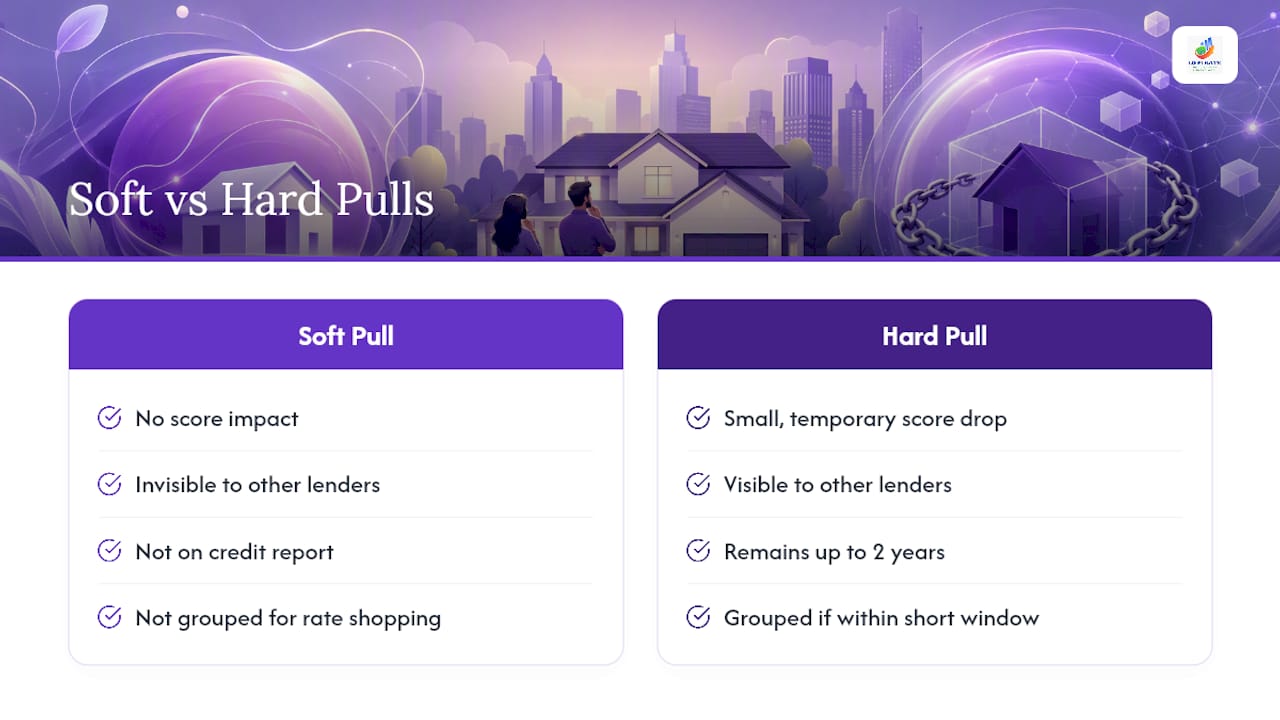
- Soft pulls don't affect your score, aren't visible to other lenders, and are commonly used for prequalification, promotional offers, and background checks by current creditors.
- Hard pulls can lower your score temporarily, stay visible to other lenders, and are used for actual credit applications, including mortgage preapproval.
- Duration on file: soft inquiries fall off relatively fast and never influence scoring models. Hard inquiries remain on your credit report for up to two years.
- Consumer visibility: you can see both types when you check your own report, but soft pulls never appear when a business checks your credit for lending purposes.
Knowing this distinction upfront saves you from panicking every time a lender asks for basic financial information early in the process.
How Lenders Use Soft Pulls for Prequalification vs Hard Pulls for Preapproval
Mortgage prequalification is designed to be fast and low-friction. You give a lender your estimated income, debts, and assets, they run a soft pull mortgage prequalification check, and within minutes you get a rough number for what you might qualify to borrow. Nothing here is verified. It's an educated guess based on self-reported numbers and a light credit look.
Preapproval is a heavier lift. Lenders typically require pay stubs, W2s, bank statements, and tax returns, and they run a hard pull to confirm the credit profile behind your application. A study on prequalification versus preapproval notes that preapproval verification is what gives the resulting letter real weight with sellers and real estate agents, since it reflects confirmed numbers rather than estimates.
Some lenders have started blurring these lines. Certain hybrid products begin with a soft pull mortgage prequalification and gather documents upfront, but still delay the hard pull until later in underwriting. Others advertise "preapproval" language while only running a soft check, which muddies expectations for buyers comparing offers.
Key workflow differences to keep in mind:
- Prequalification: self-reported numbers, soft pull, usually instant, no obligation, letter carries little weight in a competitive offer.
- Preapproval: verified documents, typically a hard pull, takes longer, carries more weight with sellers.
- Hybrid products: vary by lender, sometimes verify documents before running the hard pull.
Because there's no industry-wide standard for these terms, don't assume anything. Ask the loan officer directly which stage triggers which type of inquiry.
Does a Soft Pull Actually Affect Your Credit Score?
No. A soft pull mortgage inquiry has zero effect on your credit score, full stop. It's informational only, and it's invisible to any other lender who checks your file later. Wells Fargo states plainly that its prequalification credit check is a soft inquiry with no credit score impact, which is standard practice across most major retail lenders and mortgage brokers.
Hard pulls are where the real, if modest, impact happens.
Statistic callout: According to Experian's guidance on mortgage preapproval, a hard inquiry generally causes a small, temporary decrease in your credit score and remains on your credit report for up to two years, though scoring models typically weigh it most heavily only for the first 12 months.
The good news is that credit scoring models anticipate rate shopping. FICO and VantageScore both group multiple mortgage-related hard inquiries made within a short window, typically within a few weeks depending on the scoring model, and count them as a single inquiry rather than penalizing you for each one. That window is exactly why the smart move is comparing lenders through soft pulls first, then submitting your actual applications close together once you've picked your finalists.
How to Shop for a Mortgage Without Hurting Your Credit
Rate shopping doesn't have to cost you score points if you sequence it correctly. Here's the order that protects your credit while still letting you compare real offers:
- Pull your own credit reports first. Use AnnualCreditReport.com to check all three bureaus and dispute any errors before a lender ever sees your file. A wrong collection account or an outdated balance can quietly cost you a better rate.
- Prequalify with several lenders using soft pulls. This is where a soft pull mortgage prequalification earns its keep. You get ranges for rate and loan amount across multiple lenders without a single point of score damage.
- Narrow to your top one or two lenders. Compare the numbers, ask about fees, and pick finalists based on more than just the headline rate.
- Submit formal applications close together. Keep your hard pulls inside a limited window so scoring models treat them as one shopping event rather than several separate credit hits, a strategy Bankrate specifically recommends for anyone rate shopping seriously.
- Lock your rate once you're comfortable. Rate locks and full underwriting typically require the verified hard pull and finalized documents, so this is the last step before closing prep begins.
Pro Tip: Space out your lender conversations so you're not requesting a hard pull from three separate companies over three separate weeks. Batch your applications into a tight window, and you'll dodge the biggest common mistake in mortgage shopping.
Following a structured mortgage shopping checklist keeps this process from feeling chaotic, especially if you're comparing more than a couple of lenders at once.
What to Ask Lenders: Exact Questions and Red Flags
Don't guess. Ask directly, and get the answer in writing when possible.
- "Is this a soft pull or a hard pull, and will it affect my credit score?"
- "At what point in this process will you run a hard inquiry?"
- "How long is my prequalification or preapproval letter valid?"
- "Will you need to verify my income and assets before issuing this letter?"
- "What's your NMLS number, and can I verify it independently?"
- "Will you re-check my credit before closing, and could that trigger another hard pull?"
Watch for red flags. If a loan officer is vague about which type of inquiry they're running, or pressures you to "just sign the authorization" without explaining what it permits, slow down. A legitimate lender will confirm in writing whether a check is soft or hard. You can independently verify any loan officer's registration through NMLS Consumer Access, which is the public database for licensed mortgage originators in the U.S. If someone won't provide their NMLS number, that alone is reason to walk away. Reviewing standard mortgage disclosure requirements also helps you spot when a lender is skipping steps they're supposed to disclose.
From Soft Pull to Hard Pull: Triggers, Timeline, and What to Avoid
A hard pull gets triggered the moment you move from estimate to commitment: submitting a formal loan application, requesting verified preapproval, locking a rate, or entering underwriting. Any of those steps typically means your file gets a full, hard credit check.
Preapproval letters are not permanent. Most are valid for somewhere between 30 and 90 days, and many lenders will refresh your credit report or request updated documents if your home search runs long or your file goes stale. That refresh can sometimes mean another inquiry, so ask upfront how your specific lender handles renewals. A detailed walk-through of the approval process covers what typically happens between preapproval and closing in more depth.
Between preapproval and closing, keep your finances boring. Don't open a new credit card, finance a car, or make a large, unexplained deposit. Underwriters look for financial consistency right up to closing day, and anything that changes your debt load or income picture can jeopardize the loan you thought you already had locked in.
The LoFiRate Perspective on Soft-Pull Shopping
Most mortgage advice treats soft pulls as a footnote. We think they're the whole point of shopping smart. Lofirate connects borrowers with licensed wholesale mortgage brokers who can generate soft pull mortgage prequalification estimates across multiple lender options at once, rather than forcing you to repeat the same conversation with five different retail banks.
Wholesale brokers see pricing that retail loan officers simply don't have access to, and because Lofirate doesn't lend money or quote rates itself, there's no incentive to steer you toward one product. Every consultation is meant to be transparent and no-obligation, which matters most in the exact scenario this article covers: comparing real options without racking up hard pulls you didn't need. Compliance and disclosure aren't an afterthought here. They're the reason the model works at all for people trying to protect both their credit and their leverage at the negotiating table.
— LoFi
Get a Soft-Pull Rate Estimate Without Committing to a Lender
Lofirate exists to solve the exact problem this article walks through: comparing real mortgage options without a stack of hard pulls hitting your credit report. Instead of contacting five retail lenders one by one, you request a single, no-obligation consultation, and Lofirate matches you with a licensed wholesale broker in your state who can shop multiple lenders on your behalf.

Wholesale brokers routinely see pricing retail bank loan officers never show you, and because Lofirate doesn't lend directly or quote rates itself, there's no built-in incentive to push you toward a single product. The process starts with a soft pull mortgage prequalification conversation, not a hard credit hit, so you can see realistic numbers before deciding whether to move forward. If you're comparing purchase, refinance, or FHA and VA loan options, start your no-obligation broker consultation through Lofirate's services page and see what a second opinion on your rate actually looks like.
Sources
- What exactly happens when a mortgage lender checks my credit? — CFPB
- Does getting preapproved affect your credit? — Experian
This article is general information, not a substitute for advice from a qualified financial advisor. Consult a qualified financial professional about your own circumstances before acting on anything here.