

TL;DR:
- Tracking your mortgage status helps you monitor your loan's progress and catch delays early.
- Using online portals, mobile apps, and automated alerts enables real-time updates and quick responses.
Tracking your mortgage status means knowing exactly where your loan application stands at every stage, using digital platforms or direct contact with your lender. The industry term for this process is loan status monitoring, and it covers everything from initial application receipt through final disbursement. Knowing how to track mortgage status gives you the power to catch delays early, respond to lender requests fast, and close on time. Tools like Bank of America's Home Loan Navigator and PNC's Home Insight Tracker have made real-time visibility standard for most borrowers.
What tools and methods can you use to track your mortgage status?
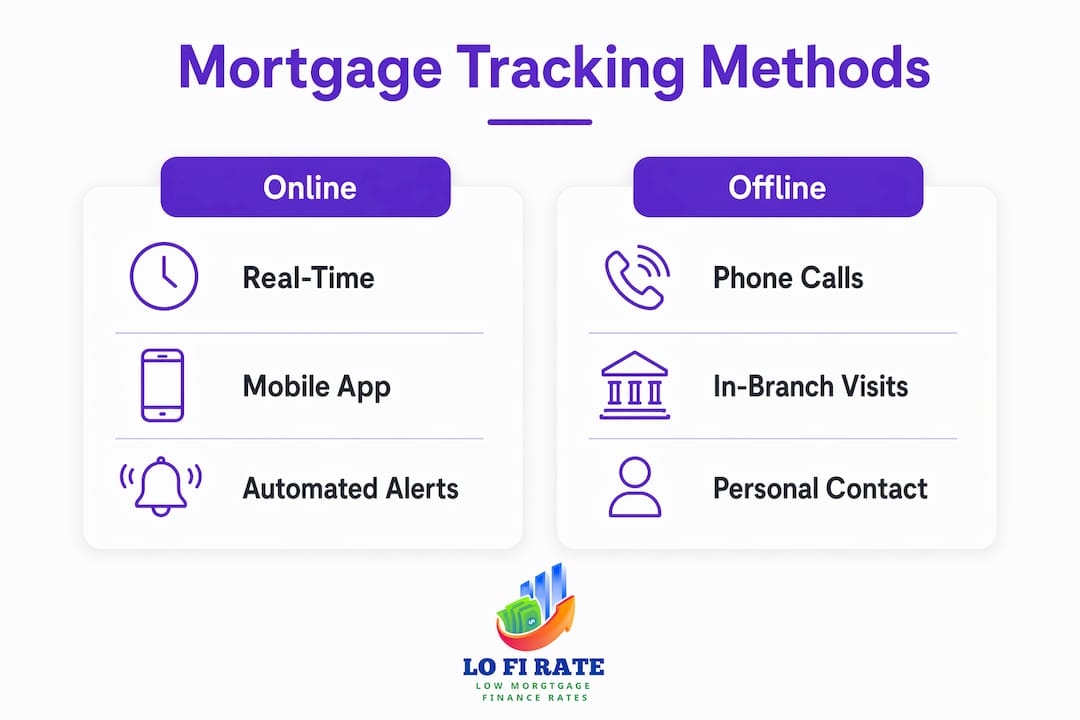
Online portals update in real time, while traditional phone-based methods may take up to 24 hours to reflect the latest information. That gap matters when your rate lock has a deadline or a seller is waiting on your closing date. Most lenders now offer 24/7 access through a dedicated portal or mobile app, tied to your unique application reference number.
Online portals and mobile apps

Your lender's online portal is the fastest way to check mortgage application status at any hour. Banks like Wells Fargo, Chase, and Bank of America each provide borrower dashboards that display the current stage of your file. PNC's Home Insight Tracker goes further by showing a visual timeline of completed and pending milestones. Mobile apps from these same lenders push notifications directly to your phone when your file moves forward.
SMS, email, and automated alerts
Automated notification systems reduce borrower anxiety by informing borrowers of loan milestones without requiring manual checks. You sign up for alerts during the application process, and the system contacts you each time your file advances. This is especially useful during the underwriting stage, when days can pass without visible movement. ClosingLock's Closing Progress Tracker is one example of a platform built specifically around milestone-based alerts.
Offline options: phone and in-branch visits
A direct call to your loan officer remains the most reliable fallback when a portal shows an unclear status. Most lenders staff customer care lines during business hours, and your loan officer's direct number is the fastest route to a real answer. In-branch visits work for complex situations, but they rarely produce faster results than a phone call for a simple status inquiry.
| Tracking method | Update speed | Best for |
|---|---|---|
| Online portal | Real time | Daily monitoring |
| Mobile app | Real time with push alerts | On-the-go updates |
| SMS/email alerts | Within minutes of milestone | Passive monitoring |
| Customer care line | Same business day | Clarifying unclear statuses |
| In-branch visit | Same day | Complex document issues |
Pro Tip: Save your application reference number in two places, such as a notes app and a printed document. Losing your reference number can delay updates by 24–48 hours due to manual verification requirements.
How do you interpret common mortgage status updates?
Every status label your lender shows you maps to a specific stage in the underwriting workflow. Reading them correctly tells you whether to sit tight, gather documents, or call your loan officer immediately.
Common status definitions explained
- Application Received: Your file is in the system and assigned to a processor.
- Under Review: An underwriter is actively evaluating your income, credit, and property details.
- Verification in Progress: The lender is contacting employers, appraisers, or title companies to confirm your information.
- Conditionally Approved / Sanctioned: You qualify, but the lender needs specific documents before final approval.
- Pending Disbursement: Approval is complete and funds are being prepared for release.
- Disbursed / Funded: The loan has closed and money has transferred.
- On Hold / Suspended: A specific issue requires your attention before the file can move forward.
What "On Hold" actually means
"On Hold" is not a rejection. Prompt contact upon an "On Hold" status can speed resolution by 3–5 days. Lenders use this label when a condition is outstanding, such as a missing pay stub, an expired appraisal, or a title issue. Contact your loan officer the same day you see this status. Ask for the exact condition causing the hold and a deadline for resolving it.
Pro Tip: When you receive a document request, submit everything in one batch rather than piece by piece. Borrower responsiveness directly accelerates approval turnaround time, and partial submissions create additional back-and-forth.
Common lender requests that appear during processing include:
- Updated bank statements (typically the two most recent months)
- Letter of explanation for a credit inquiry or employment gap
- Homeowner's insurance declarations page
- Updated pay stubs if your previous ones are more than 30 days old
- Gift letter if any portion of your down payment came from a family member
What are typical mortgage processing timelines?
Typical mortgage processing takes 3–4 weeks, with some lenders completing the process in 10–14 days. Self-employed borrowers or those with complex income structures often see longer timelines. Understanding where you fall on that spectrum helps you set realistic expectations and plan your move-in date accordingly.
How borrower behavior affects speed
Your actions have a direct impact on how fast your loan closes. Borrowers who respond to document requests the same day they arrive consistently close faster than those who wait. The home loan approval timeline also depends on third parties like appraisers and title companies, which are outside your control. Focus your energy on the parts you can control: fast document delivery and clear communication.
How milestone dashboards reduce anxiety
Interactive milestone dashboards show specific outstanding tasks so borrowers always know what is blocking progress. AD Mortgage's AIM Interactive Milestones platform is one example that flags pending borrower actions in real time. This removes the guesswork from the waiting period and replaces it with a clear to-do list. Millennial and Gen Z borrowers in particular prefer this style of real-time, task-specific feedback over periodic phone updates.
| Borrower type | Typical timeline | Key delay risk |
|---|---|---|
| W-2 employee, clean credit | 10–14 days | Appraisal scheduling |
| Self-employed borrower | 4–6 weeks | Income documentation |
| VA loan applicant | 3–5 weeks | COE processing |
| Complex asset/income profile | 6+ weeks | Underwriter conditions |
The VA home loan COE process targets an average 5-business-day response time. Submitting duplicate requests during that window does not speed things up. It creates confusion and can actually slow the process down.
Step-by-step guide to tracking your loan from application to funding
Following a consistent routine keeps you informed and prevents small delays from becoming big ones. Here is a clear process you can follow from day one.
-
Collect your credentials at application. Write down your application reference number, the lender's portal URL, and your loan officer's direct phone number. Store these in a secure location immediately.
-
Log into the lender's portal within 24 hours. Confirm your account is active and that your application shows the correct status. This is also the time to verify that your email and phone number are correct for alert delivery.
-
Sign up for all available notifications. Enable SMS alerts, email updates, and any in-app push notifications. The more channels you activate, the less likely you are to miss a time-sensitive request.
-
Check your portal every 2–3 business days. Batch processing of automated updates can create a small lag between actual file progression and what you see on screen. A quick manual check fills that gap.
-
Respond to every lender request within 24 hours. When your portal flags a condition or your loan officer calls, treat it as urgent. Delays on your end directly extend your closing date.
-
Keep all communication in writing. After every phone call with your loan officer, send a brief email summarizing what was discussed. This creates a paper trail and prevents miscommunication about deadlines or document requirements.
-
Escalate only when necessary. If your status has not changed in more than five business days and you have submitted all requested documents, contact your loan officer directly. If you do not get a response within one business day, ask to speak with their manager or a senior processor.
Pro Tip: Create a dedicated email folder for all mortgage correspondence. When your lender asks for a document you already sent, you can find and resend it in seconds rather than searching through your inbox.
The home loan application process also involves third-party timelines you cannot control, such as the appraisal and title search. Build at least one week of buffer into your expected closing date to account for these.
Key takeaways
Tracking your mortgage status requires a reference number, portal access, and same-day responsiveness to lender requests at every stage.
| Point | Details |
|---|---|
| Use real-time portals | Online portals and mobile apps give instant status updates, unlike phone methods that lag by up to 24 hours. |
| Guard your reference number | Losing it delays updates by 24–48 hours due to manual verification requirements. |
| "On Hold" is fixable | Contact your loan officer the same day to identify and resolve the specific condition. |
| Respond fast to requests | Same-day document submission directly reduces your total approval timeline. |
| Enable all alert channels | SMS, email, and push notifications together prevent you from missing time-sensitive lender requests. |
What I have learned from watching borrowers track their loans
Most borrowers treat mortgage tracking as a passive activity. They log in once a week, see no change, and assume everything is fine. That assumption costs people their closing dates more often than any underwriting issue does.
The borrowers who close fastest are the ones who treat their loan file like a project with a hard deadline. They check their portal every couple of days, they respond to requests within hours, and they keep every document organized in a folder they can access from their phone. That behavior is not stressful. It is the opposite. When you know exactly where your file stands, you stop worrying.
The other thing most articles will not tell you is that "On Hold" statuses are often triggered by something minor, like a bank statement that is 31 days old instead of 30. Lenders are not trying to derail your loan. They are following compliance rules. When you see that status, call immediately and ask for the exact condition. Nine times out of ten, you can resolve it the same day.
Mortgage compliance requirements are also worth understanding, because they explain why lenders ask for the same document twice or request a letter of explanation for a $200 deposit. It is not arbitrary. Knowing the reason behind a request makes it much easier to respond correctly the first time.
The last thing I would say: if your lender's portal is unclear or outdated, that is a signal worth paying attention to. A lender who invests in transparent borrower tools usually runs a tighter operation overall. The technology reflects the process.
— LoFi
Lofirate connects you to brokers who keep you informed
Tracking your loan status is easier when you are working with a broker who communicates clearly from day one. Retail lenders often leave borrowers in the dark, while wholesale brokers who work with multiple lenders tend to be more responsive because your business is not guaranteed.

Lofirate connects homebuyers and homeowners with licensed wholesale mortgage brokers in their state. These brokers shop multiple lenders to find competitive rates and keep you updated throughout the process. If you are starting a purchase or considering a refinance, explore broker matching options through Lofirate for a no-obligation consultation. You can also check mortgage options in your area to get a clearer picture of what is available before you apply.
FAQ
How do I check my mortgage application status online?
Log into your lender's online portal using your application reference number and account credentials. Most major lenders provide real-time status updates through their borrower dashboard or mobile app.
What does "conditionally approved" mean on my mortgage status?
Conditionally approved means the underwriter has cleared your application but needs specific documents before issuing final approval. Submit the requested items as quickly as possible to avoid extending your closing date.
How long does mortgage processing typically take?
Mortgage processing typically takes 3–4 weeks, though some lenders complete it in 10–14 days. Self-employed borrowers or complex applications can take six weeks or longer.
What should I do if my mortgage status shows "On Hold"?
Contact your loan officer the same day. An "On Hold" status flags a specific condition that needs your attention, and prompt response can resolve it 3–5 days faster than waiting.
Can I speed up my mortgage approval by calling my lender repeatedly?
No. Submitting duplicate requests or calling multiple times does not accelerate processing. Responding quickly to document requests and submitting complete files is the most effective way to reduce your approval timeline.