

TL;DR:
- Most residential mortgages are current and performing, with 97.4% of first-lien loans in September 2025 successfully managed. Understanding mortgage types, securing pre-approvals, and comparing lenders beyond just interest rates can significantly save costs and prevent mismatches. Regularly managing and reviewing your mortgage, along with proactive communication, helps borrowers stay on track over the long term.
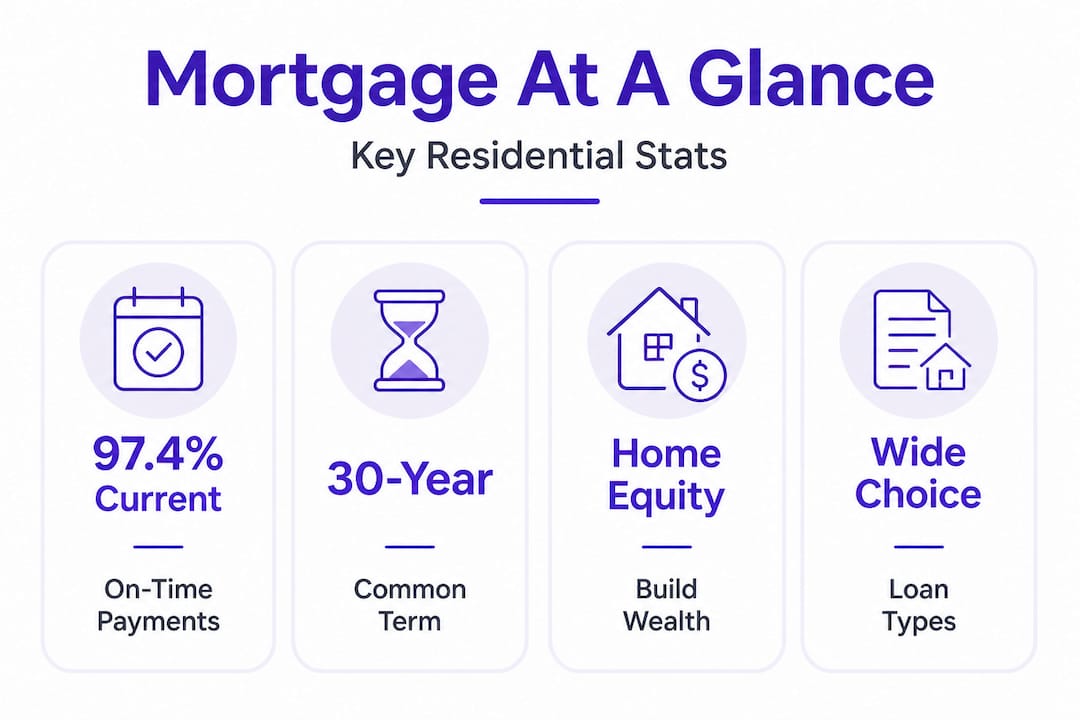
Most people assume mortgage trouble is everywhere, but 97.4% of first-lien residential mortgages were current and performing as of September 30, 2025, according to OCC reporting. That statistic should give every nervous first-time buyer real confidence. Millions of American homeowners are managing their mortgages just fine, not because the process is simple, but because they took the time to understand it. This guide walks you through everything you need to know: what a residential mortgage is, how to get one, how to compare lenders intelligently, and how to keep your loan healthy long after closing day.
Table of Contents
- What is a residential mortgage?
- Steps to getting a residential mortgage: From prep to approval
- Understanding mortgage rates and comparing lenders
- Maintaining your residential mortgage: Staying on track and getting help
- The truth most homebuyers miss about residential mortgages
- Find your best mortgage rates with expert guidance
- Frequently asked questions
Key Takeaways
| Point | Details |
|---|---|
| Residential mortgage basics | These loans help homeowners buy properties they plan to live in, with clear borrower rights and responsibilities. |
| Mortgage process steps | Preparation, choosing a lender, and careful application are key to getting the right home loan. |
| Comparing lenders | Smart borrowers compare more than just rates—they focus on servicing, fees, and contract terms for the best fit. |
| Staying current | Most homeowners succeed by managing payments and seeking help early if issues arise. |
| Expert support | Wholesale mortgage brokers and expert guidance can help homebuyers access lower rates and simplify the process. |
What is a residential mortgage?
A residential mortgage is not just a loan. It is the legal agreement that makes homeownership possible for the vast majority of Americans who cannot pay cash for a home. Understanding exactly what you are signing matters more than almost any other decision in the buying process.
At its core, a residential mortgage is a loan used to finance the purchase of a home where the borrower plans to live. The home itself serves as collateral, meaning the lender has a legal claim to the property if you stop making payments. That security arrangement is what allows lenders to offer lower interest rates on home loans compared to unsecured credit like personal loans or credit cards.
Residential mortgages are fundamentally different from commercial mortgage loans. A commercial loan finances office buildings, retail spaces, or rental properties held as investments. Residential loans are personal. They cover single-family homes, condos, townhouses, and multi-unit properties up to four units where you, the borrower, occupy one of the units as your primary residence.
The CFPB mortgage tools frame the mortgage experience in three phases for consumers: getting a mortgage, maintaining it, and getting help if things go wrong. Each phase comes with rights, responsibilities, and resources. Understanding this structure from the beginning helps you stay informed rather than reactive throughout the life of your loan.
It also helps to get comfortable with mortgage terminology before you start shopping. Words like "principal," "amortization," "escrow," and "LTV" show up constantly, and knowing them cold gives you an edge when reviewing loan estimates.
"Residential mortgages are used to buy a home for personal, family, or household purposes, with the property serving as security for the loan."
Here is a quick comparison to anchor the concept:
- Residential mortgage: Borrower lives in the property, lower rates, stricter personal income review, federally regulated consumer protections
- Commercial mortgage: Property used for business or investment, higher rates, evaluated on property income potential, less consumer-focused regulation
- Investment property loan: Similar to residential but rates are higher because the borrower does not occupy the home
- Hard money loan: Short-term, asset-based, much higher rates, used for flips or quick acquisitions, rarely suitable for primary residences
Understanding the right category of loan for your situation prevents costly mismatches between product and purpose. Most essential real estate terms are tied to these loan types, so building this vocabulary early pays off throughout your buying journey.
Steps to getting a residential mortgage: From prep to approval
With the definition clear, let's walk through the steps every successful homebuyer takes. The process is more predictable than most people expect, and breaking it into stages makes it far less overwhelming.
-
Check and strengthen your credit. Your credit score is one of the biggest variables in your mortgage rate. Scores above 740 typically unlock the best pricing. Pull your free credit reports from all three bureaus, dispute any errors, pay down revolving balances, and avoid opening new credit accounts for at least six months before applying.
-
Calculate what you can actually afford. Lenders look at your debt-to-income ratio (DTI), which compares your monthly debt payments to your gross monthly income. Most conventional loans want a DTI below 43%, though some programs allow higher ratios with compensating factors like a larger down payment.
-
Save for your down payment and closing costs. Conventional loans typically require 3% to 20% down. FHA loans allow as little as 3.5% with a 580 credit score. VA loans and USDA loans offer zero down payment options for qualifying borrowers. Do not forget closing costs, which typically run 2% to 5% of the loan amount on top of your down payment.
-
Choose your mortgage type. Fixed-rate mortgages lock in your rate for the entire loan term, usually 15 or 30 years. Adjustable-rate mortgages (ARMs) start with a lower fixed period and then adjust periodically. Your home purchase prep strategy should include a clear view of how long you plan to stay in the home before deciding between fixed and adjustable options.
-
Get pre-approved before you shop. Pre-approval is not pre-qualification. Pre-approval requires a full credit pull and document verification, giving you a real commitment from a lender up to a specific loan amount. Sellers take pre-approved buyers far more seriously. The CFPB's mortgage process guidance recommends securing this step before making offers. Read the full mortgage pre-approval guide to understand what documents you will need and what lenders are actually verifying.
-
Submit your formal application. Once you have a property under contract, you complete the Uniform Residential Loan Application (Form 1003). You will provide pay stubs, W-2s, tax returns, bank statements, and identification. The home loan application guide breaks down exactly what to expect at each stage of this phase.
-
Underwriting and final approval. An underwriter reviews your file for risk. They may issue conditions, meaning additional documents or clarifications they need before closing. Responding quickly to conditions keeps your timeline on track.
For step-by-step regional context, resources like this home buying steps guide offer useful real-world perspective on navigating offers and timelines in competitive markets.
Pro Tip: Working with a wholesale mortgage broker during steps 4 through 6 can significantly expand your options. Retail lenders only offer their own products, but a wholesale broker shops dozens of lenders simultaneously to find lower rates and better terms tailored to your financial profile. The savings over a 30-year loan can be substantial, often tens of thousands of dollars.
Understanding mortgage rates and comparing lenders
Once you've applied, it is crucial to understand how to compare what lenders offer, and looking beyond just the interest rate is where most homebuyers leave money on the table.
Mortgage rates are shaped by several factors. Your credit score, loan-to-value ratio, loan size, property type, and whether the home is a primary residence or second home all affect your pricing. Broader economic factors like the federal funds rate, inflation, and bond market movements play a role too, but these are outside your control. Focus on what you can influence.
What many buyers overlook is that lender underwriting and servicing practices influence real outcomes beyond just your initial rate, including how problems are handled, how smoothly escrow is managed, and how responsive the servicer is if your loan is sold after closing. Regulator reporting highlights these operational risk factors for a reason.
Here is a simple comparison table to illustrate what two similar-looking offers can actually mean:
| Feature | Lender A | Lender B |
|---|---|---|
| Interest rate | 6.75% | 6.90% |
| APR | 6.95% | 7.05% |
| Origination points | 0.5 | 0 |
| Estimated closing fees | $3,200 | $1,800 |
| Servicing reputation | Mixed reviews | Strong track record |
| Loan sold after closing? | Frequently | Rarely |
Lender A looks cheaper on the surface, but once you factor in origination points and higher fees, Lender B may cost less over the first five years. Use a mortgage calculator to run the actual numbers before deciding.
Smart steps for comparing mortgage offers:
- Check the APR, not just the rate. The APR includes fees and gives a truer picture of the total cost.
- Review all closing costs line by line. Origination fees, discount points, underwriting fees, and third-party service costs all add up.
- Ask about servicing standards. Will your loan be sold? Who handles escrow disputes or payment errors?
- Get at least three quotes. Research consistently shows borrowers who compare mortgage rates from multiple lenders save more.
- Ask smart questions. The right questions for mortgage brokers reveal how lenders handle edge cases that matter to you specifically.
- Request a second opinion. A second opinion mortgage guide explains exactly how to use competing offers as negotiating leverage.
The real estate offer process moves quickly in competitive markets, which is why having your comparison work done in advance matters. When you already know your best rate and best lender, you can act decisively without second-guessing yourself. Learning to compare lenders is one of the highest-value skills a homebuyer can develop.
Maintaining your residential mortgage: Staying on track and getting help
After comparing and settling on your mortgage, maintaining it well and knowing where to get help is essential. A mortgage is a 15 to 30 year financial commitment, and the decisions you make after closing matter just as much as the ones you made before.
Day-to-day mortgage management is mostly about consistency. Set up automatic payments so you never miss a due date. Even one late payment can affect your credit score and trigger late fees. Review your monthly statements carefully. Errors in escrow calculations, insurance charges, or payment posting do happen, and catching them early prevents larger headaches.

Budget for the full cost of homeownership, not just your mortgage payment. Property taxes, homeowner's insurance, maintenance, and HOA fees (if applicable) are real expenses that belong in your monthly financial plan. A home that fits your mortgage payment may strain your budget if you have not accounted for the full picture.
If payment difficulties arise, here is what to do:
- Contact your loan servicer immediately. Do not wait. Servicers have hardship programs, forbearance options, and modification programs that are much easier to access before you fall behind.
- Use CFPB resources. The CFPB mortgage guidance connects borrowers to housing counseling, dispute tools, and rights information designed specifically for moments of financial stress.
- Find a HUD-approved housing counselor. These counselors are free or low-cost and specialize in helping borrowers understand their options when payments become difficult.
- Document everything. Every call, every letter, every payment. If a dispute arises, documentation is your strongest asset.
- Know your rights. You have the legal right to a timely response from your servicer and to dispute errors in your account. Federal law backs these rights.
The numbers support early action. With 97.4% of first-lien mortgages performing as of September 2025, the data shows that borrowers who engage proactively with their servicer and use available resources overwhelmingly stay on track. Falling behind is not the end of the road, but waiting too long absolutely makes things harder.
Understanding your mortgage compliance rights ensures you know exactly what protections apply to your loan, from fair servicing standards to error resolution timelines. For buyers exploring different financing options, resources on Colorado home loan types offer a useful perspective on how state and loan-type variables affect your long-term management strategy.
Pro Tip: Set a calendar reminder every year to review your mortgage statement, current interest rates, and home equity. Even a small rate drop combined with increased equity could make refinancing worth exploring, potentially lowering your monthly payment or shortening your loan term significantly.
The truth most homebuyers miss about residential mortgages
Here is the uncomfortable reality: most mortgage guides spend all their time on product features and almost none on the behavior that actually determines whether you win or lose financially.
People obsess over whether to choose a 15-year or 30-year mortgage, or fixed versus adjustable, while spending five minutes comparing lenders. That is backward. The product matters, but the lender, the broker, and the rate you secure have a bigger impact on your total cost than almost any other single decision.
A borrower who chooses a 30-year fixed loan but secures a rate 0.5% lower than their neighbor pays tens of thousands less over the life of that loan. That savings came from comparison shopping and asking better questions, not from picking a different loan product. The mortgage origination process is where the real financial leverage lives.
The 97.4% current performance rate is not just a reassuring statistic. It is proof that the system works when borrowers are informed and proactive. The minority who struggle are rarely victims of bad products. They are most often people who did not compare options, did not read their servicer's communication, or waited too long to ask for help.
"97.4% of mortgages are current and performing, proving most borrowers navigate the system well with attention and readiness."
What separates successful mortgage holders from those who struggle is not income level or market timing. It is the habit of paying attention, asking smart questions before signing, and responding quickly when conditions change.
Pro Tip: Ask your broker not just for their best rate, but for their perspective on lender servicing quality and how the lender handles problems after closing. A great rate with a poor servicer can cost you more in stress and money than a slightly higher rate with a responsive, borrower-friendly lender.
Find your best mortgage rates with expert guidance
If this guide has shown you anything, it is that the difference between a good mortgage experience and a costly one comes down to comparison, preparation, and having the right guidance in your corner.

At LoFiRate.com, we connect homebuyers and homeowners with licensed wholesale mortgage brokers who shop multiple lenders to find competitive rate options, something retail lenders simply cannot do. Whether you are buying your first home, upgrading, or refinancing an existing loan, our broker matching service gives you access to wholesale pricing that most borrowers never see. Explore your loan options with no obligation and no pressure. Start comparing low mortgage rates today and find out what you might be overpaying.
Frequently asked questions
What makes a loan a "residential mortgage"?
A residential mortgage is a loan used specifically to finance a home where the borrower will live, not for investment or business properties.
How do I qualify for a residential mortgage?
Most lenders assess your credit score, income, debt-to-income ratio, and down payment amount to determine eligibility for a residential mortgage.
Why do mortgage rates vary so much between lenders?
Rates differ because lenders use unique underwriting, servicing, and risk practices, and as OCC reporting shows, these practices directly influence real performance outcomes and costs for borrowers.
What happens if I fall behind on mortgage payments?
If you miss payments, contact your lender quickly because CFPB resources connect borrowers with housing counselors and dispute tools that help most people get back on track before serious consequences occur.
Are most residential mortgage holders able to stay current on their loans?
Yes, as of September 2025, 97.4% of residential mortgage borrowers in reporting bank portfolios were current and performing on their loans.