

TL;DR:
- The home loan approval process typically takes 30 to 45 days, influenced by loan type, documentation, and borrower responsiveness. Preparing thoroughly, responding promptly, and understanding each stage can significantly reduce the timeline, sometimes to under 30 days. Different loan types, such as conventional, FHA, VA, and USDA, have varying processing times due to additional verification requirements.
The home loan approval timeline runs 30–45 days from application to closing for most borrowers, though loan type and document readiness shift that range significantly. Formally called the mortgage approval process, this workflow covers pre-approval, underwriting, appraisal, and legal disclosure periods before you get the keys. Conventional loans close in 30–40 days, FHA loans in 35–45 days, VA loans in 40–55 days, and USDA loans in 45–60 days. Knowing these numbers before you apply removes the guesswork and puts you in control of your own timeline.
What are the key stages in the home loan approval process?
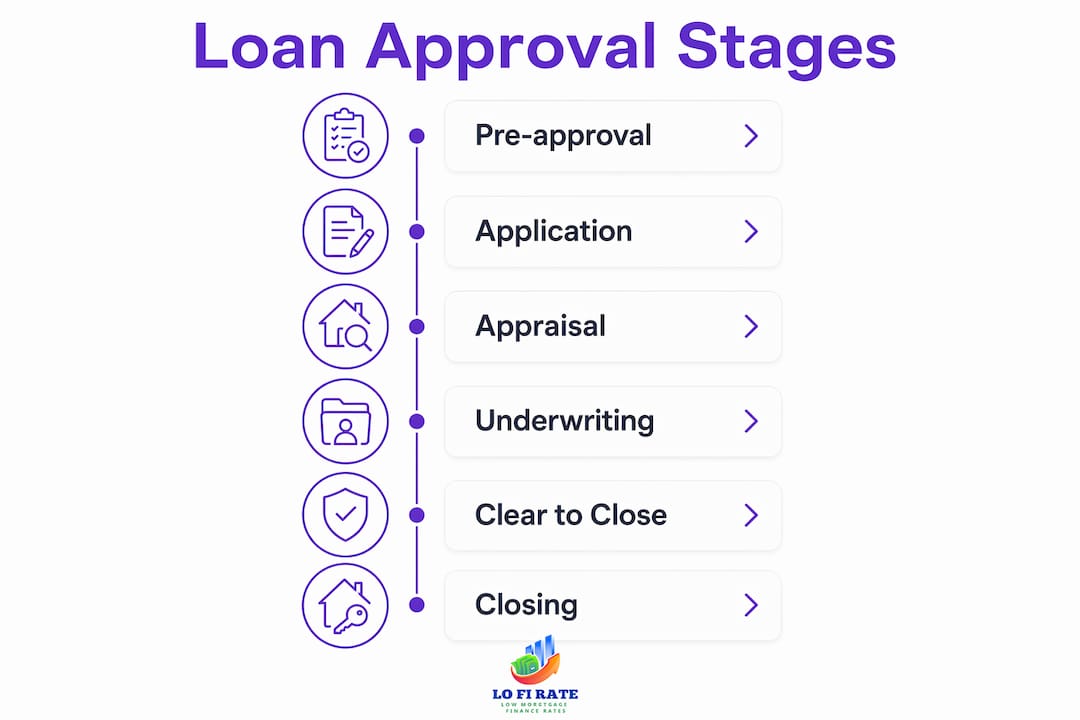
The mortgage approval process follows a defined sequence. Each stage has a typical duration, and delays in one stage push back every stage that follows.
Stage 1: Pre-approval (1–3 days)
Pre-approval is the first formal step. A lender pulls your credit, reviews your income documents, and issues a pre-approval letter. Pre-approval includes a hard credit pull and full document verification, which separates it from a simple prequalification estimate. This letter gives sellers confidence and reduces surprises later in the process.
Stage 2: Formal application and Loan Estimate (days 1–4)
Once you have a property under contract, you submit the full loan application. Federal law requires lenders to deliver a Loan Estimate within 3 business days of receiving your application. That document locks in the key loan terms so you can compare offers before committing.
Stage 3: Appraisal and home inspection (days 5–20)

The lender orders an independent appraisal to confirm the property's value supports the loan amount. Home inspections run in parallel but are buyer-initiated. Scheduling both in a busy market can take one to two weeks on its own.
Stage 4: Underwriting (days 10–30)
Underwriting is the most time-intensive stage. The underwriter reviews every document, verifies your employment and assets, and may issue conditions requiring additional paperwork. Each condition triggers a 48–72 hour review cycle, so the number of conditions directly controls how long this stage lasts.
Stage 5: Clear to Close and final prep (days 28–42)
"Clear to Close" means the underwriter has approved every condition. Your lender then prepares the Closing Disclosure, which must reach you at least 3 business days before closing. Use that window to review final costs carefully.
Stage 6: Closing day
On closing day, you sign the loan documents, pay closing costs, and receive the keys. The entire loan origination process concludes here.
| Stage | Typical duration |
|---|---|
| Pre-approval | 1–3 days |
| Formal application and Loan Estimate | 1–4 days |
| Appraisal and inspection | 5–20 days |
| Underwriting | 10–30 days |
| Clear to Close and Closing Disclosure | 3–7 days |
| Closing day | 1 day |
How do different loan types impact the approval timeline?
Loan type is the single biggest variable in home loan processing time. Government-backed loans add extra verification layers that conventional loans skip entirely.
| Loan type | Average days to close |
|---|---|
| Conventional | 30–40 days |
| FHA | 35–45 days |
| VA | 40–55 days |
| USDA | 45–60 days |
Conventional loans move fastest because they follow standard Fannie Mae and Freddie Mac guidelines without additional agency review. FHA loans require an FHA-specific appraisal that checks property condition against HUD standards, adding time. VA loans require the lender to obtain a Certificate of Eligibility from the Department of Veterans Affairs and complete a VA appraisal, which extends the typical approval period by one to two weeks compared to conventional. USDA loans carry the longest timeline because the file must pass through both the lender's underwriting and a separate USDA Rural Development review before closing.
Jumbo loans, which exceed conforming loan limits, often take as long as VA or USDA loans because lenders apply stricter income and asset scrutiny. Refinances can move faster than purchases since no property sale is involved, but a cash-out refinance adds an appraisal and can stretch back to 30–45 days.
Pro Tip: If speed matters more than loan type benefits, ask your broker to compare a conventional loan against an FHA loan side by side. The rate difference sometimes favors FHA, but the timeline difference often favors conventional.
What factors accelerate or delay the home loan approval timeline?
Several forces outside the loan type itself push the timeline forward or backward. Some are in your control. Others are not.
Factors that delay approval:
- Missing or incomplete documents. Underwriters cannot advance without every required item. A single missing W-2 can pause the file for days.
- Financial changes after application. Opening new credit or changing jobs after submitting your application triggers re-verification. In serious cases, it leads to loan denial even after conditional approval.
- Appraiser availability. In competitive markets, appraisal scheduling delays alone can add one to two weeks to the process. Appraisers are independent contractors, and lenders cannot rush them.
- Title search complications. Liens, easements, or clerical errors in public records must be resolved before underwriting can finish. Title issues are among the least predictable delays because they depend on the property's history, not the borrower's profile.
- Lender workload. Underwriting teams handle multiple files simultaneously. During high-volume periods like spring buying season, review cycles stretch longer.
Factors that accelerate approval:
- Submitting a complete document package at application
- Responding to underwriter conditions the same day you receive them
- Choosing a lender with in-house underwriting rather than outsourced review
- Scheduling the appraisal immediately after going under contract
Pro Tip: Treat every underwriter condition like an urgent email. Each day you delay responding adds 48–72 hours to your timeline because the file re-enters the review queue.
How to prepare effectively to minimize your home loan approval time
Well-prepared buyers with straightforward finances can close in under 30 days. The difference between a 28-day close and a 50-day close usually comes down to borrower preparation, not lender speed.
Follow these steps before and during the process:
- Gather documents before you apply. Collect two years of W-2s or tax returns, 30 days of pay stubs, two months of bank statements, and a government-issued ID. Self-employed borrowers should add profit and loss statements and business bank records.
- Get pre-approved early. Pre-approval compresses the early stages of the workflow for mortgage approval timeline because the lender has already verified your credit and income. When you find a property, you skip straight to the formal application.
- Freeze your finances after application. Do not open new credit cards, finance a car, or make large cash deposits. Any unexplained financial change requires documentation and re-verification.
- Maintain steady employment. A job change after application, even a promotion, requires the lender to verify your new income and may restart parts of underwriting.
- Respond immediately to every lender request. Set up email notifications and check messages daily. A 24-hour response versus a 72-hour response can shave a full week off your closing date.
- Work with a mortgage broker. Brokers track your file across multiple lenders and flag issues before they become delays. They also know which lenders have faster underwriting turnaround for your specific loan type.
Pro Tip: Build a single digital folder with every required document before your first lender conversation. Buyers who upload a complete package at application consistently close faster than those who send documents piecemeal.
For first-time buyers who want a broader overview of the purchase process, the first-time homebuyer guide from Ficus Tree covers the full sequence from saving for a down payment through closing day.
Key takeaways
The home loan approval timeline runs 30–45 days for most borrowers, but preparation, loan type, and borrower responsiveness are the three variables that determine where your timeline actually lands.
| Point | Details |
|---|---|
| Standard timeline | Most borrowers close in 30–45 days, depending on loan type and document readiness. |
| Loan type matters | USDA and VA loans take the longest; conventional loans typically close fastest. |
| Underwriting is the bottleneck | Each condition adds 48–72 hours, so responding quickly to requests cuts total time. |
| Financial changes cause delays | Avoid new credit, large purchases, or job changes after submitting your application. |
| Preparation shortens the process | Complete document packages at application can push closing under 30 days. |
What "Clear to Close" actually means (and what it doesn't)
Here is something I see trip up first-time buyers constantly. They receive "Clear to Close" and immediately call the moving company. That is the wrong move. Clear to Close means the underwriter has approved your file. It does not mean you are closing tomorrow.
Federal law requires a mandatory three-business-day review period after you receive the Closing Disclosure. Buyers should never schedule moving or final arrangements for the same day they receive Clear to Close. I have seen buyers lose non-refundable deposits on moving trucks because nobody explained this distinction clearly.
The other misconception I run into is that third-party delays are somehow the lender's fault. Appraisers, title companies, and county recording offices operate on their own schedules. A good lender communicates these delays honestly. A great broker anticipates them and builds buffer time into the plan from day one.
My honest advice for first-time buyers: treat the 30-to-45-day range as a planning floor, not a guarantee. Budget for 50 days mentally, work aggressively toward 30, and you will almost never be caught off guard. The borrowers I see get frustrated are the ones who locked in a lease end date on day one of their home search. Give yourself room.
— LoFi
Work with Lofirate to move through your mortgage faster
Knowing the timeline is one thing. Having the right team to manage it is another.

Lofirate connects you with licensed wholesale mortgage brokers who shop multiple lenders to find competitive rates and faster underwriting options. Retail lenders offer only their own pricing and their own timelines. A wholesale broker at Lofirate works across lenders to match you with the option that fits both your rate goals and your closing deadline. Whether you are buying your first home or refinancing an existing loan, a no-obligation consultation through Lofirate's broker matching service takes minutes to start. Visit Lofirate to connect with a licensed broker in your state today.
FAQ
How long does home loan approval typically take?
The typical home loan approval timeline runs 30–45 days from application to closing, depending on loan type and borrower document readiness. Well-prepared borrowers with conventional loans can sometimes close in under 30 days.
What is the difference between pre-approval and final approval?
Pre-approval takes 1–3 days and confirms your borrowing capacity based on a credit pull and income review. Final approval comes after underwriting clears all conditions, which happens much later in the process.
Can I speed up my mortgage approval?
Yes. Submitting a complete document package at application, responding to underwriter conditions within 24 hours, and avoiding new credit inquiries are the three most effective ways to shorten home loan processing time.
Why do VA and USDA loans take longer to close?
VA loans require a Certificate of Eligibility and a VA-specific appraisal. USDA loans require a separate review by USDA Rural Development after the lender's underwriting is complete. Both add steps that conventional loans do not have.
What happens after I receive "Clear to Close"?
After receiving Clear to Close, your lender issues the Closing Disclosure. Federal law requires a minimum three-business-day review period before you can sign and fund the loan.