

Mortgage rates are stabilizing in the low-to-mid-6% range, and the market has shifted from chasing historic lows to managing payment sensitivity, product selection, and underwriting complexity. The key home financing trends for 2026 come down to four forces: rate stabilization without a return to pandemic-era lows, growing demand for ARMs and specialty loan products, a slow but real inventory recovery, and stricter condo underwriting rules from Fannie Mae and Freddie Mac that are already delaying closings.
- First-time buyers face persistent affordability pressure but have more assistance programs and product options than in 2022 or 2023. Broker shopping across multiple lenders can shave meaningful basis points off your rate.
- Move-up buyers benefit from modest inventory gains as the rate lock-in effect eases, but competition in mid-tier price ranges remains real.
- Refinancers need a clear break-even calculation before acting. Most owners locked in below 4% won't benefit yet, but those in the 5.5–6.5% range may find windows opening.
According to Forbes Advisor's mortgage rate forecast, industry experts expect 30-year fixed rates to hold in the low-to-mid-6% range through 2026 rather than revert to 2020-era lows. That's the new normal, and planning around it beats waiting for a number that isn't coming.
Pro Tip: Get preapproved before you start shopping homes, and use a licensed wholesale mortgage broker to compare pricing across multiple lenders. In August 2026, identical borrower profiles showed up to a 38-basis-point spread across lenders — that gap translates directly to hundreds of dollars per month.
Key Takeaways
The single most important move in 2026 is to shop mortgage pricing across multiple lenders before committing, because identical borrower profiles are showing up to a 38-basis-point spread across lenders, and that gap compounds into thousands of dollars over the life of a loan.
| Point | Details |
|---|---|
| Rates are stabilizing, not dropping | Experts expect 30-year fixed rates to hold in the low-to-mid-6% range; plan payments around this, not a return to 3%. |
| ARMs are a legitimate tool for some buyers | Bank of America reports ARMs at roughly 10% of loan volume; they work best when your ownership timeline fits the initial fixed period. |
| Condo buyers face new underwriting rules | Fannie Mae and Freddie Mac eliminated limited reviews in August 2026; budget 60–90 days and verify CPM status before making an offer. |
| Non-traditional down payments are rising | ICE Mortgage Monitor data shows the highest share in several years of purchase down payments coming from family gifts and retirement savings. |
| Lofirate connects you to wholesale pricing | Lofirate matches borrowers with licensed wholesale brokers who shop multiple lenders, giving you access to pricing retail branches don't publish. |
Table of Contents
- What are the key home financing trends shaping 2026?
- How is housing inventory changing, and what does it mean for prices?
- Which mortgage products are worth watching in 2026?
- How can first-time buyers close the affordability gap in 2026?
- Who can realistically refinance in 2026, and when does it make sense?
- What do the new Fannie Mae and Freddie Mac condo rules mean for buyers?
- How is technology changing the mortgage application process in 2026?
- A practical checklist for buyers and homeowners acting on 2026 trends
- What are typical loan timelines and out-of-pocket costs in 2026?
- What risks and red flags should you watch for in 2026?
- How borrowers fund down payments and why broker shopping matters
- A mortgage expert's perspective on what to do in 2026
- How Lofirate helps you capture better mortgage pricing in 2026
- Sources
What are the key home financing trends shaping 2026?
Rate stabilization: the low-to-mid-6% range is the new baseline
Expert consensus tracked by Forbes Advisor points to stabilization in the low-to-mid-6% range as the working norm for 2026, with modest downward drift possible if inflation continues cooling and the Federal Reserve holds its current posture. The market has stopped pricing in dramatic cuts.
The 50-basis-point difference is $131 per month, or nearly $7,900 over five years. Rate shopping isn't a nice extra step — it's where real money lives.
Volatility hasn't disappeared. Geopolitical shocks, a surprise inflation print, or an unexpected shift in Fed language can move rates 20–30 basis points in a week. Buyers who are close to qualifying at current rates should take that seriously when deciding whether to lock or float.
For a deeper read on mortgage rate trends in 2026, the macro drivers behind the current range are worth understanding before you commit to a timeline.
What to do based on your goal:
- Buying now: Lock a rate once you're under contract if the payment works at today's pricing. Don't gamble on a 25-basis-point drop that may not materialize before your closing date.
- Waiting and watching: Set a rate alert, but set a deadline. Waiting indefinitely while prices rise can cost more than a slightly higher rate.
- Refinancing: Run a break-even calculation first. If your current rate is above 6.75% and you plan to stay five or more years, the math may already work.
How is housing inventory changing, and what does it mean for prices?
Supply is recovering, but slowly and unevenly. Freddie Mac's analysis projects a roughly 1.7% increase in existing home sales as the share of owners holding sub-6% rates declines. That's not a flood of new listings, but it's movement.
Census Bureau new residential construction data shows new builds are filling some of the gap, particularly in the Sun Belt and Midwest where land costs and regulatory timelines are more manageable. The White House's 2026 executive actions on removing regulatory barriers to housing construction could accelerate supply over the medium term, though the impact on 2026 closings will be limited.
Regional picture for buyers:
- South and Midwest: More inventory, more new construction, and relatively better affordability. First-time buyers and move-up buyers have the most options here.
- High-cost coastal markets (California, New York, Pacific Northwest): Supply remains constrained. Price relief is minimal. Buyers in these markets face the sharpest affordability math.
- Mountain West and secondary metros: Mixed. Some markets saw price corrections in 2023–2024 and have stabilized; others are seeing renewed demand from remote workers.
For investors, the 2026 investor playbook from Jake N Finance Group addresses the record $440,600 median home price environment and what it means for acquisition strategy.
Starter-home buyers benefit most from inventory gains in affordable metros. Move-up buyers in mid-tier markets will find more options than in 2022, but don't expect a buyer's market in most of the country.
Which mortgage products are worth watching in 2026?
ARMs are back as an affordability tool
Adjustable-rate mortgages have climbed to roughly 10% of current loan volume at Bank of America, the highest share since 2023. Buyers are using them strategically: accept a lower initial rate for 5 or 7 years, then refinance if fixed rates drop. That's a reasonable plan if you have a clear exit strategy and understand the reset risk.

Over five years, that's $12,000 in payment savings before the rate adjusts. The risk is real if rates stay elevated or rise further at reset, but for buyers who plan to sell or refinance within the initial fixed window, the math can work.
Specialty products and who they fit:
- 15-year fixed: Lower rate, higher payment, dramatically less total interest. Best for buyers with strong income who want to build equity fast.
- Non-QM loans: For self-employed borrowers, investors, or those with non-traditional income documentation. Typically priced 25–50 basis points above conforming loans.
- Down-payment assistance programs: State and local programs, often layered with FHA loans, that can reduce upfront cash requirements significantly.
- 40-year loan modifications: Primarily a loss-mitigation tool for existing borrowers, not a standard purchase product, but worth knowing exists.
Pro Tip: An ARM makes the most financial sense when your initial fixed period aligns with your realistic ownership timeline. If you're buying a starter home and expect to move or refinance within 7 years, a 7/1 ARM deserves a serious look. Use a wholesale broker to compare ARM options across multiple lenders — the spread on ARM pricing can be even wider than on fixed products.
For buyers curious about the full range of non-traditional mortgage options in 2026, the product landscape is broader than most retail lenders will show you.
How can first-time buyers close the affordability gap in 2026?
Affordability remains the defining challenge. But the tools available to close that gap have expanded. The ICE Mortgage Monitor recorded the highest share in several years of purchase down payments coming from non-traditional sources, with younger buyers leaning heavily on family gifts and loans, while older buyers are tapping retirement savings.
That shift matters for planning. If you're receiving a gift for your down payment, lenders require a gift letter and documentation of the transfer. Retirement account withdrawals carry tax implications that should be modeled before you commit.
Assistance options worth knowing:
- State Housing Finance Agency (HFA) programs: Most states offer below-market first mortgage rates and down-payment grants for income-qualified buyers. Eligibility varies by county and purchase price.
- FHA loans: 3.5% down with a 580+ credit score. Mortgage insurance is required, but the lower entry point matters for buyers without large savings.
- VA loans: Zero down for eligible veterans and active-duty service members. One of the most powerful products in the market.
- USDA loans: Zero down in eligible rural and suburban areas. Often overlooked by urban buyers who don't realize how broadly "rural" is defined.
- HUD fair housing and assistance programs: A useful starting point for local grant and counseling resources.
- Lender-specific programs: Bank of America and other large lenders offer proprietary down-payment grants in select markets. Ask specifically — these aren't always advertised prominently.
Pro Tip: Stacking a state HFA first mortgage with a down-payment assistance grant and then shopping that combination through a wholesale broker can produce a rate and cost structure that beats what most retail lenders will quote you. Down-payment funding resources exist specifically for buyers who need creative structuring.
Who can realistically refinance in 2026, and when does it make sense?
The lock-in effect is the defining feature of today's resale market. That's why existing home inventory has stayed tight. As Freddie Mac's data shows, the share of owners with sub-6% rates is declining, which is slowly releasing supply, but the majority of locked-in owners aren't moving anytime soon.
Refinance candidate profiles:
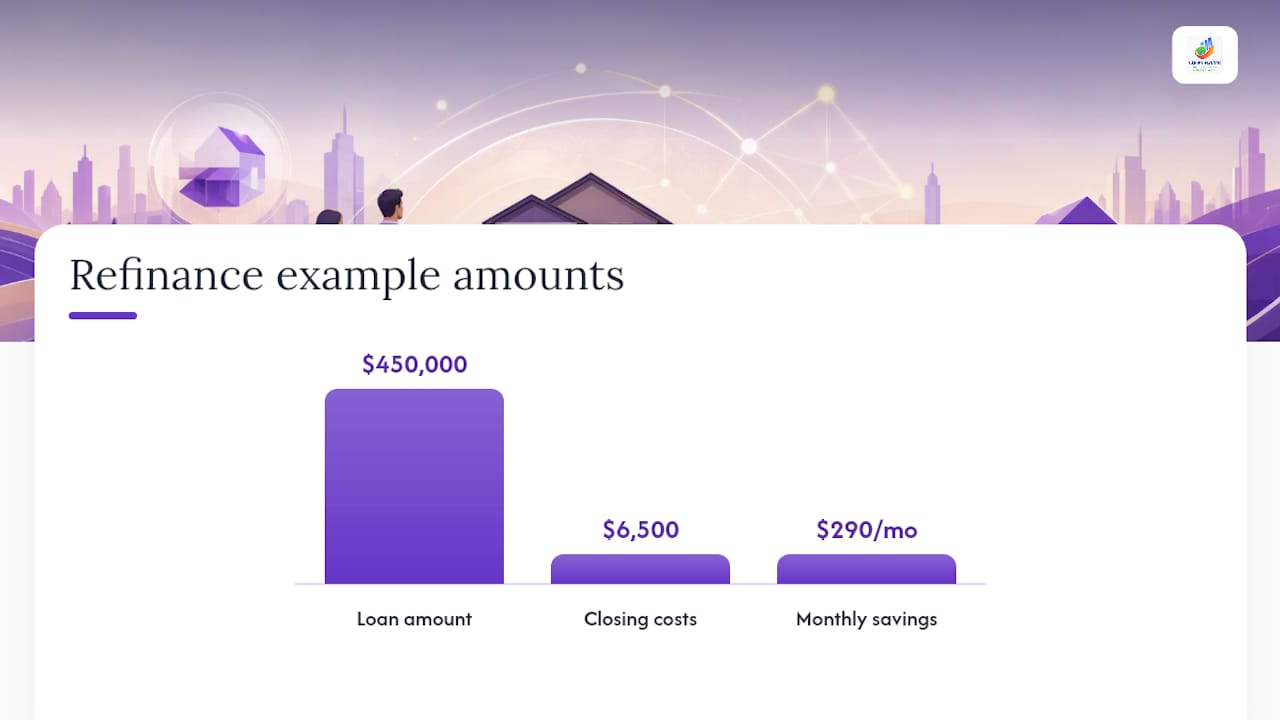
- Bought in 2023–2024 at 7%+: These borrowers are the most likely refinance candidates if rates dip into the mid-5% range. Even a 100-basis-point drop on a $450,000 loan saves roughly $290 per month.
- Adjustable-rate borrowers approaching reset: If your ARM is resetting above your current payment, refinancing into a fixed product now may be worth the cost.
- Cash-out refinancers: Home equity has grown substantially. Owners with significant equity may find cash-out refinancing useful for home improvements or debt consolidation, even at current rates.
- FHA-to-conventional switchers: Borrowers who put down less than 20% on an FHA loan and now have 20%+ equity can refinance to a conventional loan and eliminate mortgage insurance.
If closing costs total $6,500, break-even is about 25 months. Stay in the home longer than that, and the refinance pays off.
- Calculate your current monthly payment and the projected new payment.
- Get a Loan Estimate from at least three lenders or brokers.
- Divide total closing costs by monthly savings to find break-even in months.
- Compare that to your expected time in the home.
- If break-even is under 36 months and you plan to stay, the refinance is worth pursuing.
Pro Tip: Float your rate until you're within 30–45 days of closing, then lock. If you're refinancing, don't lock until you've compared quotes from at least two or three sources. A rate-sensitive homeowner guide can help you identify exactly where you fall on the lock-vs-float spectrum.
What do the new Fannie Mae and Freddie Mac condo rules mean for buyers?
This is the underwriting change most buyers don't know about until it derails their closing. Fannie Mae and Freddie Mac eliminated the limited condominium review, effective August 2026, which means far more condo projects now require a full project review before a conventional loan can be approved.
Common failure points in full condo reviews:
- Inadequate reserves: Buildings with less than 10% (soon 15%) of annual budget in reserves will fail.
- High HOA delinquency rates: More than 15% of units delinquent on dues is a disqualifier.
- Pending litigation: Any active lawsuit involving the HOA or building structure triggers a review flag.
- Insurance gaps: Inadequate hazard or fidelity insurance coverage disqualifies a project.
- Commercial space concentration: Buildings where more than 35% of space is commercial may not qualify.
If a condo building fails the GSE full review, buyers typically must shift to a non-QM loan, which runs roughly 25–50 basis points above conforming rates. That's a meaningful cost increase on top of an already-stretched budget.
Practical steps for condo buyers:
- Ask your lender whether the building is already in Fannie Mae's Condo Project Manager (CPM) database and whether it has a current approval.
- Request HOA meeting minutes, reserve study, and insurance certificates before making an offer.
- Budget 60–90 days for closing if the building needs a full review from scratch.
- Have a backup financing plan if the building doesn't qualify for conventional financing.
How is technology changing the mortgage application process in 2026?
AI and document automation are genuinely shortening the mortgage process for well-prepared borrowers. The gains are real, but they're not magic.
Where technology is making a difference:
- Automated income and asset verification: Lenders using platforms like Fannie Mae's Day 1 Certainty or similar tools can verify income and assets digitally in hours rather than days, eliminating the back-and-forth of paper bank statements.
- AI-assisted underwriting: Machine learning models flag anomalies faster than manual review, which speeds conditional approvals for clean files.
- Digital closing platforms: E-notarization and remote online notarization (RON) are now available in most states, cutting the closing appointment from hours to minutes.
- Fraud detection: The same AI that speeds approvals is also scanning for synthetic identity fraud and income misrepresentation, which means inconsistencies in your file get caught faster.
Where human oversight still matters: complex income situations (self-employed, commission-heavy, rental income), non-QM underwriting, and condo project reviews all require experienced human judgment. Technology speeds the easy files; the complicated ones still take time.
Pro Tip: Prepare a clean digital file before you apply: two years of tax returns, 60 days of bank statements, recent pay stubs, and a letter explaining any large deposits. Borrowers who submit organized documentation upfront move through automated underwriting faster and with fewer conditions. A licensed wholesale broker who works with multiple lenders can also tell you which lender's tech stack is best suited to your specific file type.
A practical checklist for buyers and homeowners acting on 2026 trends
For buyers
- Get preapproved, not just pre-qualified. A full preapproval with verified income and assets carries weight with sellers and locks in your qualifying rate for 60–90 days.
- Shop at least three lenders or use a wholesale broker. The 38-basis-point spread documented in August 2026 is real money. Don't accept the first quote.
- Map your down-payment sources early. If you're using a gift, get the documentation process started. If you're tapping retirement savings, model the tax impact first.
- Build a condo contingency plan. If you're targeting a condo, ask about CPM status before you fall in love with a unit.
- Budget closing timeline buffers. Standard purchases: 30–45 days. Condo full reviews: 60–90 days.
For refinancers:
- Confirm your current rate and remaining balance.
- Run a break-even calculation before requesting quotes.
- Get Loan Estimates from at least three sources and compare APR, not just rate.
- Ask each lender for a full cost disclosure, including origination fees and third-party costs.
- Check whether your current loan has a prepayment penalty (rare on conventional loans, but worth confirming).
Pro Tip: Use Lofirate to compare licensed wholesale broker quotes before committing to any lender. Wholesale brokers access pricing that retail branches don't publish, and the comparison takes minutes, not days. Preparing your documents in advance means you can move fast when the right quote appears. Learn more about protecting your mortgage rate before you lock.
What are typical loan timelines and out-of-pocket costs in 2026?
Setting realistic expectations on time and money prevents the two most common buyer surprises: a closing that takes longer than expected and costs that exceed the initial estimate.
Typical timelines:
- Standard purchase (conventional or FHA): 30–45 days from accepted offer to closing.
- VA loans: 40–50 days, given the VA appraisal process.
- Condo purchase requiring full GSE review: 60–90 days. If the building has never been reviewed or has known issues, budget toward the longer end.
- Refinance: 30–45 days for a straightforward rate-and-term refinance; longer if cash-out or non-QM.
Typical out-of-pocket costs:
| Cost Category | Typical Range | Notes |
|---|---|---|
| Origination fee | 1% of loan amount | Negotiable; wholesale brokers often have lower origination costs |
| Appraisal | $500 | Higher for jumbo or complex properties |
| Title insurance and settlement | $3,500 | Varies by state and purchase price |
| Home inspection | $400 | Non-negotiable for buyers; worth every dollar |
| HOA/condo due diligence | $500 | Includes document review fees charged by HOA management companies |
| Condo reserve study review | $300 | May be required if the building's study is outdated |
| Prepaid interest and escrow setup | 2–3 months of taxes and insurance | Collected at closing to fund escrow account |
Condo buyers should also budget for potential special assessment exposure. If a building is underfunded and needs structural repairs, a special assessment can hit current owners (and buyers who close before the assessment is levied) for tens of thousands of dollars. Request the last two years of HOA meeting minutes and ask directly whether any special assessments are pending or anticipated.
What risks and red flags should you watch for in 2026?
Most financing problems are visible before closing if you know where to look.
Red flags to watch:
- High HOA delinquency: More than 15% of units behind on dues signals financial stress in the building and will likely fail a GSE full review.
- Thin reserves: A reserve study showing less than 10% funded is a warning sign. The 15% GSE threshold takes effect in January 2027.
- Insurance gaps: Ask for the current master policy. Missing flood coverage in a flood zone or inadequate hazard coverage can kill a loan.
- ARM reset risk: If you're taking an ARM, model the worst-case payment at the cap rate. Make sure you can afford it.
- Unsupported down-payment sources: Large cash deposits without a paper trail will trigger underwriting questions. Document everything before you apply.
- Surprise liens or title issues: A title search catches most of these, but in distressed or estate sales, allow extra time.
Mitigation steps:
- For condo risk: request HOA financials, reserve study, and insurance certificates before making an offer. Walk away if the building can't produce them.
- For ARM risk: model the payment at the fully indexed rate before you sign. If it's unaffordable, choose a fixed product.
- For down-payment documentation: start the paper trail 60–90 days before you apply. Gift funds should be in your account and seasoned before the application date.
- For title issues: use an experienced title company and don't waive title insurance to save $500.
Pro Tip: Ask your real estate agent for the last 12 months of HOA meeting minutes before you make an offer on a condo. Boards are required to document major issues, pending litigation, and special assessment discussions. That document tells you more about a building's financial health than any marketing brochure.
How borrowers fund down payments and why broker shopping matters
The ICE Mortgage Monitor's July 2026 report recorded the highest share in several years of purchase down payments coming from non-traditional sources. The generational split is sharp: younger buyers are leaning on family gifts and intra-family loans, while older buyers are drawing on retirement accounts. That pattern reflects both the affordability squeeze and the wealth transfer dynamics of a market where home equity is concentrated in older cohorts.
| Buyer cohort | Primary down-payment source | Key planning consideration |
|---|---|---|
| Younger buyers (under 40) | Family gifts and intra-family loans | Gift letter required; funds must be documented and transferred before closing |
| Middle cohort (40–50) | Savings and equity from prior home | Bridge timing between sale and purchase; avoid contingency gaps |
| Older buyers (60+) | Retirement account withdrawals | Tax implications vary by account type; model net cost before committing |
Pew Research data on young adults and housing confirms that family financial support plays a growing role in housing transitions for younger cohorts, which aligns with the ICE findings.
On the rate-shopping side, the numbers are unambiguous. Identical borrower profiles showed up to a 38-basis-point spread across lenders in August 2026. On a $400,000 loan, 38 basis points is roughly $100 per month, or $6,000 over five years. Wholesale mortgage brokers access pricing from multiple lenders simultaneously, which is structurally better for the borrower than walking into a single retail branch.
Pro Tip: If you're using a family gift for your down payment, pair that with a wholesale broker search. The gift covers the entry cost; the broker search covers the ongoing cost. Both levers matter, and down-payment funding alternatives exist for buyers who need creative structuring beyond standard gift arrangements.
A mortgage expert's perspective on what to do in 2026
The buyers who will do best in 2026 aren't the ones who time the market perfectly. They're the ones who prepare their finances, understand their product options, and shop aggressively before committing.
Here's what an experienced lender would prioritize right now:
- Prepare your credit and documentation first. A 720+ credit score versus a 680 score can mean a 25–50 basis-point rate difference on a conventional loan. Pull your credit report, dispute errors, and pay down revolving balances before you apply.
- Shop brokers, not just lenders. A licensed wholesale mortgage broker accesses pricing from dozens of lenders. A retail branch shows you one. The difference in rate and fees can be substantial.
- Understand condo review status before you fall in love with a unit. Ask your lender or broker to check CPM status on any condo you're seriously considering. Finding out a building is non-warrantable after you're under contract is expensive and stressful.
- Plan your timeline around the product. Standard purchase: 30–45 days. Condo full review: 60–90 days. Don't let your rate lock expire because you underestimated the timeline.
- Verify your broker's NMLS credentials. Every licensed mortgage broker and loan officer has an NMLS number. Confirm it at nmlsconsumeraccess.org before you share financial documents with anyone.
The urgency here isn't about rates dropping tomorrow. It's about being ready when the right property and the right rate align. That preparation window is now.
How Lofirate helps you capture better mortgage pricing in 2026
Retail lenders show you their rate. Lofirate shows you the market.

Lofirate is a broker-matching platform that connects homebuyers and homeowners with licensed wholesale mortgage brokers who shop multiple lenders simultaneously. Instead of walking into a bank and accepting whatever rate they quote, you get access to wholesale pricing that most consumers never see at the retail counter.
What you get through Lofirate:
- Multiple broker quotes from licensed professionals in your state
- Access to wholesale pricing across purchase, refinance, FHA, VA, jumbo, and non-QM loan types
- Coverage for first-time buyers, move-up buyers, cash-out refinancers, and investors
- A transparent, no-obligation consultation with no upfront cost to the borrower
- Compliance safeguards and secure data handling throughout the process
Lofirate doesn't lend money or quote rates directly. The platform earns a referral fee when a matched borrower closes a loan through a partnering broker, which means the incentive is to match you with a broker who can actually deliver. Ready to see what wholesale pricing looks like for your situation? Compare broker quotes at Lofirate and find out what the market is actually offering in your state.
Sources
These are the primary sources behind the data and regulatory guidance in this article. Lender programs and local assistance options vary by state and county, so confirm current details directly with each source.
Regulatory pages update frequently. Verify effective dates on GSE policy pages (fanniemae.com and freddiemac.com) directly before making decisions based on condo review rules or reserve thresholds.
This article is general information, not a substitute for advice from a qualified financial advisor. Consult a qualified financial professional about your own circumstances before acting on anything here.