

TL;DR:
- The mortgage process involves multiple steps, from pre-approval to closing, requiring organized documentation and stable finances.
- Understanding the 2026 stress test and maintaining financial consistency are crucial to avoid approval setbacks.
The mortgage process is the defined sequence of steps homebuyers follow to obtain loan approval and secure financing for a property purchase. From gathering financial documents to signing at the closing table, each stage serves a specific purpose in verifying your ability to repay. First-time buyers and move-up buyers alike benefit from understanding what lenders actually look for, how qualification standards like the mortgage stress test affect buying power, and where delays most commonly occur. This guide walks you through every stage with the detail you need to move forward with confidence.
What are the main steps in the mortgage process?
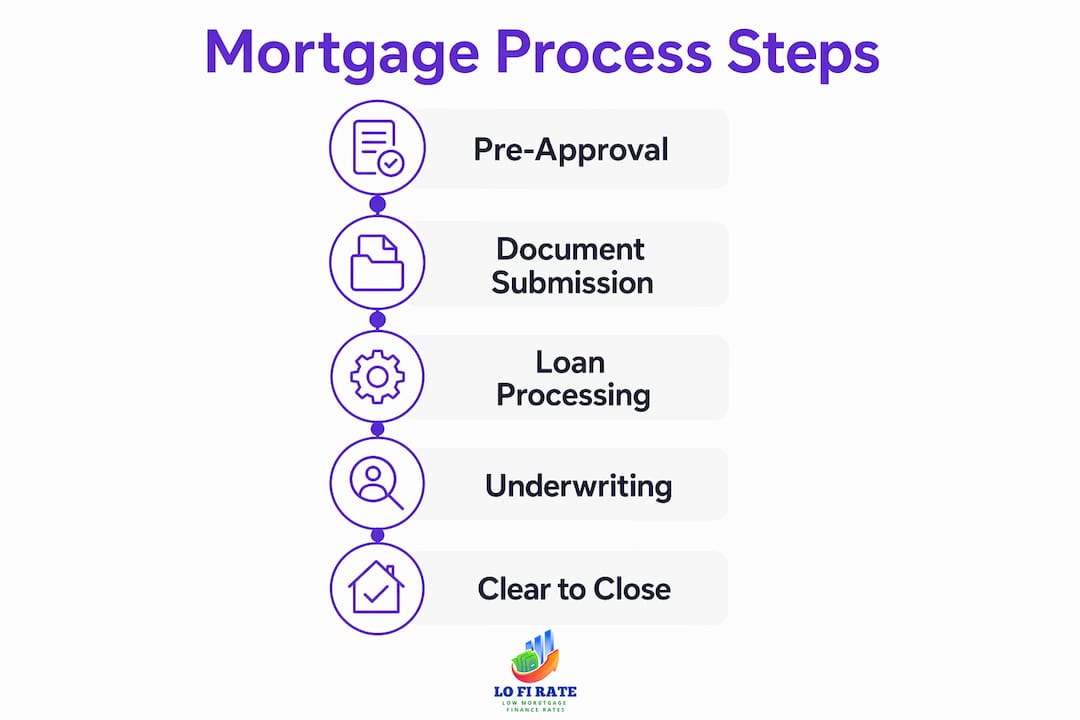
The home loan process follows seven distinct stages, and knowing each one prevents surprises. The mortgage approval process steps run in a predictable sequence, though your speed through them depends heavily on how prepared you are.
-
Pre-approval. A lender reviews your credit, income, and assets to issue a conditional borrowing limit. This is not a guarantee of funding. It is a starting point that tells sellers you are a serious buyer.
-
Formal application. You submit a complete loan application with all required financial documents. The lender assigns a loan officer and opens your file for processing.
-
Loan processing. A processor organizes your file, orders a property appraisal, and verifies your employment. This stage often takes one to two weeks.
-
Underwriting. An underwriter reviews every document and assesses risk. This is the most critical stage. The underwriter either approves, suspends, or denies the loan.
-
Conditional approval. The underwriter approves the loan subject to specific conditions, such as a letter of explanation for a bank deposit or updated pay stubs. Preparing letters of explanation in advance speeds this stage considerably.
-
Clear to close. The lender issues final approval. No financial changes should occur after this point. New credit inquiries, job changes, or large purchases can reverse the decision.
-
Closing. You sign the final loan documents, pay closing costs, and receive the keys. The entire process takes 30 to 60 days from application to closing in most cases.
That 30 to 60 day window assumes you respond quickly to document requests and avoid financial disruptions. Delays almost always trace back to missing paperwork or last-minute credit changes.
Pro Tip: Set a dedicated folder, physical or digital, for every document your lender requests. Buyers who respond to document requests within 24 hours consistently close faster than those who search for paperwork on demand.

What documents and qualifications do lenders require?
Lenders require a thorough financial picture before approving any loan. Underwriting requires two years of tax returns, 30 to 60 days of recent pay stubs, and several months of bank statements at minimum. Self-employed buyers typically need additional documentation, including profit and loss statements and business tax returns.
Beyond documents, lenders evaluate three core financial metrics:
- Credit score. A higher score signals lower risk and unlocks better rates. Most conventional loan programs require a minimum score, and scores below that threshold trigger higher rates or outright denial.
- Debt-to-income ratio. Lenders calculate both your Gross Debt Service (GDS) ratio and your Total Debt Service (TDS) ratio. GDS covers housing costs as a percentage of gross income. TDS adds all monthly debt obligations. Keeping these ratios within acceptable limits is non-negotiable for approval.
- Down payment source. Lenders verify that your down payment funds are legitimate and have been in your account long enough to rule out undisclosed loans.
The 2026 mortgage stress test requires borrowers to qualify at the higher of their contract rate plus 2% or a floor rate of 5.25%. That single rule reduces buying power by roughly 15% to 20% compared to qualifying at the actual contract rate. A buyer who qualifies for a $500,000 loan at their actual rate may only qualify for $400,000 to $425,000 under stress test conditions.
Pro Tip: Pull your credit report at least 90 days before applying. Disputing errors takes time, and a corrected score can meaningfully change the rate you are offered.
Maintaining financial stability after pre-approval matters just as much as qualifying in the first place. Pre-approval is conditional, and lenders re-verify employment and credit before closing. Any change in your financial profile between application and closing can unravel an approval that seemed secure.
How does the stress test affect your buying power?
The mortgage stress test is the single most misunderstood element of the approval process for first-time buyers. The qualifying rate formula is straightforward: lenders use whichever is higher between your actual contract rate plus 2% or the 5.25% floor. That gap between your real rate and your qualifying rate is what shrinks your approved loan amount.
The GDS and TDS ratios set hard ceilings on how much debt you can carry. GDS measures principal, interest, property taxes, and heating costs against gross income. TDS adds all other monthly debt payments, including car loans, student loans, and credit card minimums. Exceeding either ceiling disqualifies the application regardless of credit score.
Common reasons buyers fail the stress test or face denial include carrying too much existing debt, insufficient income documentation, and down payments that fall short of required thresholds. Strategies to improve your position include:
- Paying down revolving debt before applying to lower your TDS ratio. Reducing your TDS creates measurable breathing room in your application.
- Increasing your down payment to reduce the loan amount and shift your ratios into acceptable ranges.
- Adding a co-signer with strong income and low debt to strengthen the application.
- Choosing a longer amortization period to reduce the monthly payment used in ratio calculations.
One detail most buyers overlook: switching lenders at mortgage renewal requires passing the stress test again. If your financial situation has changed since your original approval, you may not qualify with a new lender at renewal. That can trap you with your current lender even if they are not offering competitive rates. Understanding this before you sign your first mortgage gives you leverage to negotiate better terms upfront.
Understanding real estate debt structures and how lenders assess borrower risk can also inform how you position your finances before applying.
What practical tips help buyers navigate the process smoothly?
The buyers who close on time share one habit: they treat the mortgage process like a part-time job during the weeks between application and closing. That means staying organized, staying available, and staying financially still.
Maintaining a closing file with current pay stubs, bank statements, and tax returns prevents the scramble that delays closings. Lenders frequently request updated documents near closing because the originals submitted at application are now too old. Buyers who have these documents ready respond in hours instead of days.
Avoid these common mistakes between pre-approval and closing:
- Opening new credit accounts. New inquiries lower your credit score and increase your debt obligations. Both hurt your approval.
- Making large deposits without documentation. Underwriters flag unusual deposits. Every large transfer needs a paper trail.
- Changing jobs. Even a lateral move to a higher salary can trigger re-underwriting if the employment type changes, such as moving from salaried to self-employed.
- Making large purchases. Buying furniture or a car before closing increases your debt load and can push your TDS ratio over the limit.
Clear to close status means the underwriter has reviewed everything and issued final approval. Treat it as a hard stop on financial activity. Any change after this point risks delaying or canceling the closing entirely.
Pro Tip: Ask your loan officer for a checklist of every document they may need before you submit your application. Getting ahead of requests eliminates the back-and-forth that stretches timelines.
Tracking your mortgage application status proactively keeps you informed and signals to your lender that you are an engaged borrower. Lenders prioritize responsive buyers when processing queues get long.
Key Takeaways
The mortgage process rewards preparation: buyers who organize their documents, protect their credit, and understand qualification standards close faster and with better terms.
| Point | Details |
|---|---|
| Know the timeline | Most home loans close in 30 to 60 days; delays almost always come from missing documents or credit changes. |
| Prepare documents early | Two years of tax returns, recent pay stubs, and bank statements are required before underwriting begins. |
| Understand the stress test | The 2026 qualifying rate is your contract rate plus 2% or 5.25%, whichever is higher, reducing buying power by 15% to 20%. |
| Protect your credit after pre-approval | Pre-approval is conditional; new debt, job changes, or large purchases can reverse an approval before closing. |
| Clear to close means stop | After receiving clear to close status, make no financial changes until the loan funds and you have the keys. |
What I have learned from watching buyers navigate this process
Most first-time buyers treat pre-approval as the finish line. It is not. It is the starting gun. The real work begins after that letter arrives, and the buyers who understand that distinction close without drama.
The detail that surprises people most is how small financial moves can derail an approval that looked solid. A $3,000 credit card opened to buy a couch. A paycheck that lands in a new account the underwriter has not seen. A job change announced two weeks before closing. None of these feel significant in the moment, but each one triggers re-underwriting and can push your closing date back by weeks.
Preparation and communication are the two variables entirely within your control. Buyers who prepare their finances thoroughly before applying and who respond to lender requests within hours rather than days consistently have better outcomes. The process is not designed to be adversarial. Lenders want to fund loans. Give them clean documentation and financial stability, and they will.
The stress test renewal trap is the insight I wish more buyers heard before signing their first mortgage. Locking into a lender without negotiating renewal terms can cost you real money years later when you cannot qualify elsewhere.
— LoFi
How Lofirate connects you with competitive mortgage rates
Retail lenders offer only their own pricing. That means you may be paying more than necessary without ever knowing a better rate existed. Lofirate connects homebuyers with licensed wholesale mortgage brokers who shop multiple lenders to find competitive rate options on your behalf.

Whether you are buying your first home or moving up to a larger property, a no-obligation consultation through Lofirate's broker matching gives you a second opinion on your rate before you commit. Wholesale access means brokers negotiate pricing that retail borrowers rarely see. Explore your loan options and find out what rate you actually qualify for through Lofirate.
FAQ
How long does the mortgage process take?
The mortgage process typically takes 30 to 60 days from application to closing. Buyers who submit complete documentation and respond quickly to lender requests close at the faster end of that range.
What is the mortgage stress test in 2026?
The stress test requires you to qualify at your contract rate plus 2% or 5.25%, whichever is higher. This rule reduces buying power by 15% to 20% compared to qualifying at your actual rate.
Does pre-approval guarantee my mortgage?
Pre-approval is not a guarantee of funding. Financial changes after pre-approval, including new credit, job changes, or large purchases, can result in denial before closing.
What documents do I need to apply for a mortgage?
Lenders require two years of tax returns, 30 to 60 days of pay stubs, and recent bank statements. Self-employed buyers typically need additional business financial records.
What does "clear to close" mean?
Clear to close is the lender's final approval signal, confirming all conditions have been met. No financial changes should occur after this point, as they can delay or cancel the closing.