

TL;DR:
- A mortgage is a secured loan used to finance a home purchase, with the property acting as collateral.
- Understanding costs like PITI and loan types helps buyers make confident decisions and avoid unexpected expenses.
A mortgage is a secured loan used to finance a real estate purchase, where the property itself acts as collateral until the loan is fully repaid. Typical loan terms run 15–30 years, and borrowers make monthly payments covering both the amount borrowed and the interest charged on it. Down payments commonly fall between 3% and 20% of the home's purchase price, depending on the loan type and the borrower's financial profile. Understanding how a mortgage works before you apply puts you in a far stronger position at every stage of the home buying process.
What is a mortgage and how does it work?
A mortgage works by splitting your home's purchase price into two parts: the down payment you pay upfront, and the loan balance the lender covers. You then repay that loan balance over time through monthly payments. Each payment reduces your principal (the amount you originally borrowed) and covers the interest the lender charges for extending the credit.

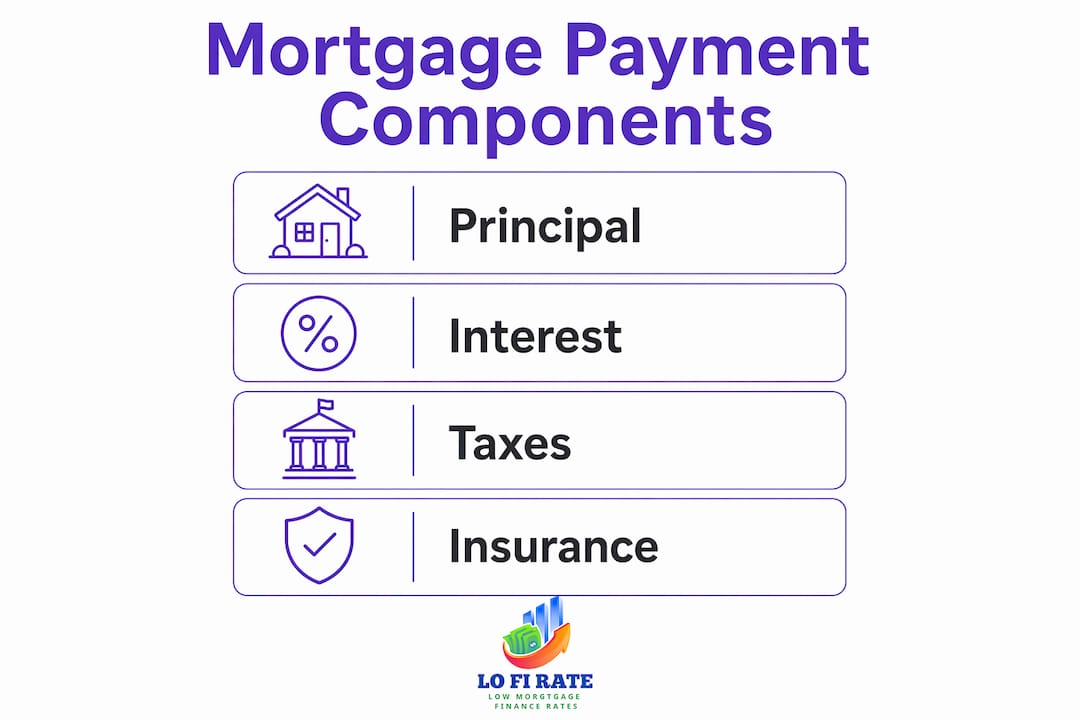
Most monthly mortgage payments include more than just principal and interest. Lenders typically bundle four costs together, a structure known as PITI: Principal, Interest, Taxes, and Insurance. PITI is the standard framework for calculating the true monthly cost of homeownership, because property taxes and insurance premiums can rise independently of your loan balance. That means your payment can change from year to year even if your interest rate stays fixed.
Most lenders collect taxes and insurance through an escrow account. The lender holds those funds and pays your tax bills and insurance premiums on your behalf. If your local tax assessment rises or your insurance premium increases, your monthly escrow contribution adjusts accordingly. You can use a mortgage payment calculator to estimate how all four PITI components affect your total monthly outlay before you commit to a loan.
| Payment component | What it covers | Fixed or variable? |
|---|---|---|
| Principal | Reduces the loan balance | Fixed (amortized) |
| Interest | Cost of borrowing the money | Fixed or variable by loan type |
| Taxes | Property taxes billed by local government | Variable (reassessed annually) |
| Insurance | Homeowners insurance and PMI if applicable | Variable (premium changes at renewal) |
Pro Tip: If your down payment is less than 20%, most conventional lenders require private mortgage insurance (PMI). PMI protects the lender, not you, and adds to your monthly cost until you reach 20% equity.
What is the mortgage application and approval process?
The mortgage application process follows a clear sequence. Knowing each step removes the guesswork and helps you avoid costly delays.
- Get pre-qualified. Pre-qualification is an informal estimate of how much you might borrow based on self-reported income and debt. It takes minutes and gives you a rough budget range.
- Get pre-approved. Pre-approval is a formal review of your credit, income, and assets. Lenders issue a pre-approval letter stating the loan amount they are willing to offer. Sellers take pre-approved buyers far more seriously than pre-qualified ones.
- Understand your pre-approval window. Pre-approval terms are typically valid for 30–90 days with most lenders, though some terms may only be locked for as few as 10 days under certain conditions. If your home search runs long, you may need to renew your pre-approval.
- Submit your formal application. Once a seller accepts your offer, you submit a complete mortgage application. This requires pay stubs, W-2s, tax returns, bank statements, and government-issued ID.
- Enter underwriting. The lender's underwriter verifies every document you submitted. Underwriting typically takes 30–60 days, though some lenders complete it in as few as 15 days under specific conditions. The underwriter checks your credit history, employment, income stability, and the property's appraised value.
- Close on the loan. At closing, you sign the final loan documents, pay closing costs (typically 2%–5% of the loan amount), and receive the keys.
Pro Tip: Do not open new credit accounts, make large purchases, or change jobs between pre-approval and closing. Financial stability during underwriting is one of the most overlooked factors in getting a loan approved. Even a large unexplained cash deposit can trigger a delay.
For a deeper look at each step, the mortgage process explained guide from Lofirate walks through the full timeline in detail.
What are the different types of mortgages available?
Choosing the right loan type affects your down payment, monthly payment, interest rate, and long-term cost. The two broadest categories are conventional loans and government-backed loans.
Conventional loans
A conventional loan is the most common mortgage type in the United States. Conventional loans generally require a minimum credit score of around 620 and accept down payments as low as 3%. A lower down payment typically means a higher interest rate and the added cost of PMI. Borrowers with strong credit and a 20% down payment get the best terms on conventional loans.
Government-backed loans
Government-backed loans like FHA and VA loans help first-time buyers and borrowers with less-than-perfect credit qualify for financing. FHA loans accept credit scores as low as 580 with a 3.5% down payment. VA loans are available to eligible veterans and active-duty service members, often with no down payment required. Both programs carry specific eligibility requirements and, in some cases, additional fees.
Fixed-rate vs. adjustable-rate mortgages
- Fixed-rate mortgage (FRM): Your interest rate stays the same for the entire loan term. Monthly principal and interest payments never change. Best for buyers who plan to stay in the home long term and want payment predictability.
- Adjustable-rate mortgage (ARM): Your rate is fixed for an initial period (commonly 5, 7, or 10 years), then adjusts periodically based on a market index. Monthly payments can rise or fall. Best for buyers who plan to sell or refinance before the adjustment period begins.
- FHA loan: Lower credit score and down payment thresholds make this the go-to option for many first-time buyers. Requires mortgage insurance premiums (MIP) for the life of the loan in most cases.
- VA loan: No down payment and no PMI for eligible veterans. One of the most cost-effective loan products available, but limited to qualifying military borrowers.
Reviewing all available loan options before you apply helps you match the right product to your financial situation.
What are the key factors to consider before applying?
Financial preparation before applying for a mortgage directly affects the rate you receive and whether you get approved at all.
- Credit score. Credit scores above 740 qualify for the best mortgage rates, while most lenders require a minimum score of around 620. A higher score means lower interest costs over the life of the loan. Check your credit report for errors before you apply and dispute any inaccuracies.
- Down payment savings. Down payments range from 3% to 20% of the purchase price. A larger down payment lowers your loan-to-value (LTV) ratio, which improves your approval odds and your rate. Budget separately for closing costs, which typically add another 2%–5% on top of the down payment.
- Debt-to-income ratio (DTI). Lenders calculate your DTI by dividing your total monthly debt payments by your gross monthly income. Most conventional lenders prefer a DTI below 43%. Paying down existing debt before applying improves your DTI and your borrowing power.
- Total homeownership costs. Your mortgage payment is not your only housing expense. Factor in property taxes, homeowners insurance, HOA fees if applicable, maintenance, and utilities. Buyers who budget only for the loan payment often find themselves stretched thin after closing.
Pro Tip: Pull your free credit reports from AnnualCreditReport.com at least three months before applying. That gives you time to dispute errors and let any corrections reflect in your score before a lender runs a hard inquiry.
The home purchase prep guide from Lofirate covers savings strategies and financial readiness steps in practical detail.
Key Takeaways
A mortgage is a secured loan repaid over 15–30 years, and understanding its full cost structure, from PITI to loan type, is the most direct path to making a confident home purchase.
| Point | Details |
|---|---|
| Mortgage definition | A secured loan using the property as collateral, repaid over 15–30 years through monthly payments. |
| PITI payment structure | Monthly payments cover principal, interest, taxes, and insurance, not just the loan balance. |
| Pre-approval matters | A formal pre-approval letter strengthens offers and is valid for 30–90 days with most lenders. |
| Loan type affects cost | Conventional, FHA, VA, fixed-rate, and adjustable-rate loans each carry different requirements and costs. |
| Financial stability is critical | Avoid new credit, job changes, or large purchases between pre-approval and closing to protect your approval. |
The part most buyers learn too late
Most first-time buyers focus almost entirely on the interest rate. That makes sense on the surface. But the rate is only one variable in a much larger equation, and it is rarely the one that causes the most financial pain after closing.
The buyers I see struggle most are the ones who budgeted for the mortgage payment and forgot about everything else. Property taxes in some counties can add $500 or more per month to your housing cost. Insurance premiums rise at renewal. HOA fees increase. Maintenance on an older home can run thousands of dollars in the first year alone. None of that shows up in the rate quote.
The second mistake is treating pre-approval as a finish line. Pre-approval is a starting point. Lenders can and do pull back offers when borrowers open new credit accounts, change jobs, or make large unexplained deposits during underwriting. I have seen buyers lose their loan approval two weeks before closing because they financed a new car. The discipline required between pre-approval and closing is real, and most buyers underestimate it.
Shopping for a rate through a wholesale mortgage broker rather than going directly to a single retail lender is one of the most practical steps a buyer can take. Wholesale brokers access pricing from multiple lenders, which means you see a broader range of options than any single bank can offer. That comparison alone can save thousands of dollars over the life of a loan.
— LoFi
How Lofirate connects you to better mortgage options
Buying a home is one of the largest financial decisions you will make. Getting the right mortgage rate matters as much as finding the right property.

Lofirate connects homebuyers with licensed wholesale mortgage brokers who shop multiple lenders on your behalf. Retail lenders offer only their own pricing. Wholesale brokers access a wider pool of options, which means more competitive rates and terms for you. The process starts with a no-obligation consultation, so you can explore your loan options without any pressure. Whether you are purchasing your first home or refinancing an existing loan, Lofirate makes it straightforward to find out if you are overpaying on your current or future mortgage.
FAQ
What is a mortgage in simple terms?
A mortgage is a loan you take out to buy a home, using the property as collateral. You repay the loan over a set term, typically 15–30 years, through monthly payments that cover both the amount borrowed and the interest charged.
What does a monthly mortgage payment include?
Most monthly mortgage payments cover four components: principal, interest, property taxes, and homeowners insurance, collectively known as PITI. Lenders often collect taxes and insurance through an escrow account and pay those bills on your behalf.
How long does the mortgage approval process take?
The underwriting process typically takes 30–60 days after you submit a formal application. Some lenders complete it in as few as 15 days under specific conditions, but 30–60 days is the standard range to plan around.
What credit score do I need to get a mortgage?
Most lenders require a minimum credit score of around 620 for conventional loans. Scores above 740 generally qualify for the best available mortgage rates and the lowest borrowing costs over the life of the loan.
What is the difference between pre-qualification and pre-approval?
Pre-qualification is an informal estimate based on self-reported financial information. Pre-approval is a formal review of your credit, income, and assets, and it carries far more weight with sellers when you make an offer on a home.