

TL;DR:
- MERS is an electronic registry that tracks mortgage ownership and servicing rights for home loans. It acts as a nominee, not the lender, and reduces costs and delays in loan transfers. Homeowners can verify their loan status using their MIN and the MERS ServicerID tool.
The Mortgage Electronic Registration System, known as MERS, is an electronic registry that acts as a nominee mortgagee to track ownership and servicing rights for millions of American home loans. When you close on a home, your mortgage documents likely name MERS as the mortgagee of record in county land files, even though MERS never lends you a dollar. Understanding how this MERS mortgage system works gives you real power to verify your loan status, identify your servicer, and protect yourself if ownership ever changes hands.
What is a MERS mortgage and how does it work?
MERS is a privately held electronic registry owned by Intercontinental Exchange since 2018. Its core job is to track two things: who owns your loan and who services it. Before MERS existed, every time a lender sold your mortgage to another investor, a physical assignment had to be recorded at your county recorder's office. That process cost money, took weeks, and created mountains of paperwork.

MERS acts as the mortgagee of record in county land documents on behalf of the actual lender. When the loan is sold or servicing rights change, the transfer happens inside the MERS database rather than at the county office. This eliminates physical county recording for most ownership and servicing transfers. The result is a faster, cheaper process for lenders and investors.
How MERS assigns and tracks your loan
Every loan registered with MERS receives a unique 18-digit Mortgage Identification Number, called a MIN. That number stays with your loan for its entire life, regardless of how many times it changes hands. You can find your MIN printed on your original mortgage or deed of trust documents.
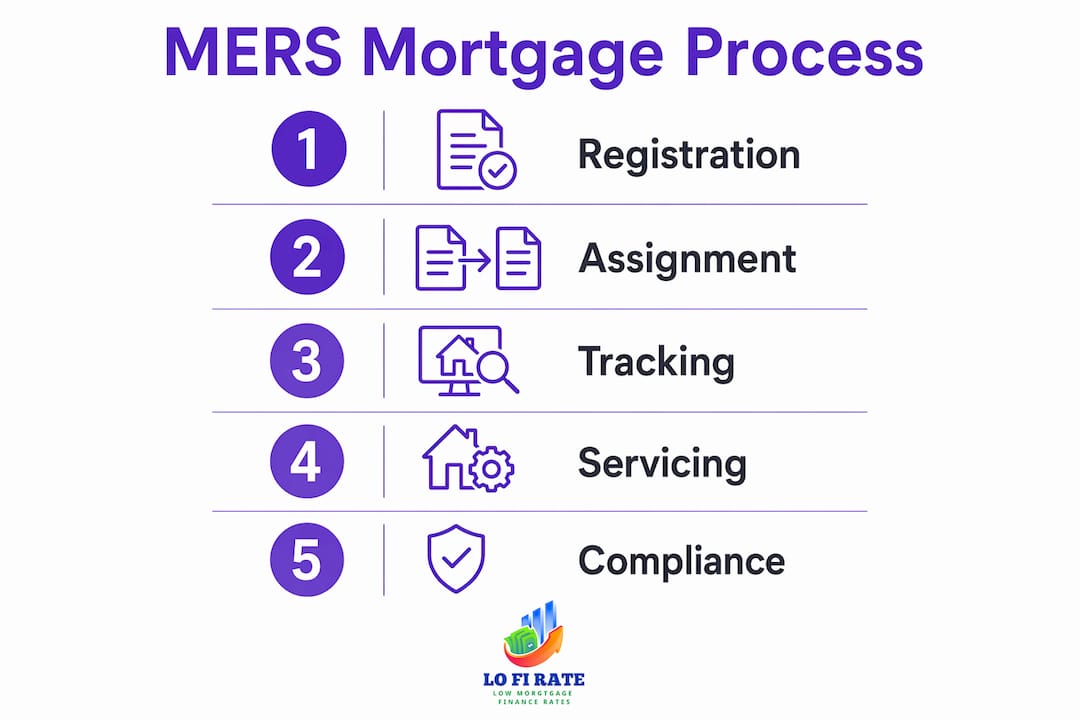
The MERS mortgage process for a typical ownership or servicing transfer follows these steps:
- The original lender registers the loan in the MERS database and receives a MIN.
- The lender sells the loan or transfers servicing rights to another company.
- The new owner or servicer updates the MERS database electronically.
- No new county recording is required for that transfer.
- Borrowers can use the MIN to look up the current servicer at any time through the MERS ServicerID tool.
Pro Tip: Write your MIN down and store it with your closing documents. You will need it if your loan is sold and you want to quickly identify your new servicer without waiting for a mailed notice.
What are the real benefits of the MERS system?
MERS reduces costs for the entire mortgage industry, and some of those savings flow back to borrowers in the form of lower fees. Recording fees and paperwork costs drop significantly when transfers happen electronically rather than through county offices. A loan that changes hands three times would otherwise require three separate county filings, each carrying its own fee and processing delay.
Speed is the other major gain. Loan transfers that once took weeks now complete in days inside the MERS system. That matters most during refinancing, when delays in servicing transfers can create confusion about where to send payments.
The MERS eRegistry also supports fully digital mortgage closings. The MERS eRegistry has surpassed 3 million registered eNotes, and digital registration adoption has grown from 30% to 80% among top lenders. That shift means more homeowners can close remotely and have their loan tracked electronically from day one.
Key benefits the MERS system delivers:
- Fewer county recording fees per loan transfer
- Faster servicing updates when loans are sold
- Centralized data that borrowers can query using their MIN
- Support for eNote registration and fully digital closings
- Reduced risk of lost or misfiled paper assignments
Common misconceptions about MERS and what they mean for you
The biggest misunderstanding homeowners have about MERS is that it owns their loan. It does not. MERS acts strictly as an agent or nominee for lenders and investors, with no beneficial interest in the loan itself. Official guidance from the U.S. Treasury, the Federal Reserve, the FDIC, and the FHFA all confirm this agent role. MERS cannot foreclose on you, modify your loan, or accept your payments.
The confusion often starts at closing, when borrowers see "MERS" listed as the mortgagee on their deed of trust. That listing reflects MERS's nominee role, not actual ownership. Your actual lender, and later any investor who buys the loan, holds the real financial interest.
Legal challenges have added another layer of complexity. MERS's database is confidential, which can make it hard for borrowers to identify the true owner of their mortgage, especially during foreclosure proceedings. Courts in several states have questioned whether MERS has legal standing to initiate foreclosure without a formal paper assignment on file.
Here is a practical checklist for avoiding common MERS-related confusion:
- Confirm your actual loan servicer by calling the number on your monthly statement, not the MERS listing on your deed.
- Use your MIN and the MERS ServicerID tool online to verify the current servicer independently.
- Check your state's recording laws. Some U.S. states require formal paper assignments in county land records for foreclosure proceedings, even when MERS tracks the loan electronically.
- If you receive a foreclosure notice, request a full chain of title from your servicer to confirm proper assignment.
- Consult a HUD-approved housing counselor if ownership of your loan is unclear.
Pro Tip: If your loan servicer changes and you are unsure who now holds your mortgage, do not skip a payment while waiting for clarity. Send your payment to the last known servicer and document it. Federal law gives you a 60-day grace period after a servicing transfer before late fees can be charged.
How to verify your mortgage status using MERS
Homeowners have direct access to MERS data through the MERS ServicerID tool, which is publicly available online. You enter your MIN, and the system returns the name and contact information of your current loan servicer. This is the fastest way to confirm who to call about your mortgage after a sale or transfer.
Your MIN appears on your original mortgage or deed of trust, typically near the top of the document. If you cannot locate it, your closing disclosure or title documents may also carry it. Borrowers can also track loan servicing changes electronically using the MIN throughout the life of the loan.
The table below summarizes what homeowners can and cannot find through MERS:
| Information Type | Available Through MERS | Notes |
|---|---|---|
| Current loan servicer name | Yes | Use MERS ServicerID with your MIN |
| Servicer contact information | Yes | Returned with servicer name lookup |
| Loan owner or investor identity | Limited | Database is confidential; not always disclosed |
| Loan balance or payment history | No | Contact your servicer directly |
| Chain of title assignments | Partial | Some states require county records for full history |
| eNote registration status | Yes | Available through MERS eRegistry for digital loans |
Understanding MERS's nominee role versus the actual lender's role helps you ask the right questions when something changes with your loan. MERS tells you who services it. Your servicer tells you everything else.
MERS also requires its member servicers to follow strict operational rules and frequent compliance audits, updated several times per year. That structure means the servicer information in the MERS database is generally current and reliable. Still, always cross-reference MERS data with the contact information on your most recent mortgage statement.
For homeowners navigating mortgage compliance requirements, knowing that MERS operates under regulated audit cycles adds a layer of confidence. The system is not perfect, but it is accountable.
Key Takeaways
MERS is a nominee registry that tracks mortgage ownership and servicing rights electronically, giving homeowners a reliable tool to verify their loan status without relying on county records alone.
| Point | Details |
|---|---|
| MERS is not your lender | MERS acts as a nominee only; it holds no financial interest in your loan. |
| MIN is your tracking tool | Your 18-digit Mortgage Identification Number lets you look up your current servicer anytime. |
| State law still matters | Some states require paper county assignments for foreclosure, regardless of MERS tracking. |
| eNote adoption is growing | Digital registration has grown from 30% to 80% among top lenders, making electronic closings standard. |
| Servicer data is reliable | MERS audits servicer records frequently, so ServicerID results are generally current and accurate. |
What I've learned about MERS that most homeowners miss
Most homeowners I talk to have never heard of MERS until something goes wrong with their loan. A servicer changes. A foreclosure notice arrives. Suddenly they are staring at a deed of trust that names an entity they do not recognize, and they feel completely lost.
The nominee structure is genuinely confusing, and I think the mortgage industry has done a poor job explaining it. MERS is not hiding anything sinister. It is a registry, like a vehicle title database, except for home loans. The problem is that transparency concerns around MERS are real, particularly when borrowers need to identify loan owners during disputes or foreclosure.
My honest advice: pull your MIN from your closing documents today, before you ever need it. Run it through the MERS ServicerID tool and confirm your servicer matches what is on your monthly statement. Do this once a year. It takes five minutes and gives you a clear picture of who actually manages your loan. That small habit has saved homeowners significant confusion when servicers change without clear notice.
— LoFi
How Lofirate helps you navigate mortgage ownership questions
Knowing who holds your mortgage is one piece of the puzzle. Getting the best rate on that mortgage is another.

Lofirate connects homebuyers and homeowners with licensed wholesale mortgage brokers who shop multiple lenders to find competitive rate options. Retail lenders show you their own pricing only. Wholesale brokers access a wider market. If you are purchasing a home or refinancing and want to understand your loan options before committing, Lofirate makes that process straightforward. There is no obligation, no pressure, and no guessing about whether you are overpaying. Connect with a licensed broker through Lofirate's broker matching service and get a second opinion on your mortgage rate today.
FAQ
What does MERS stand for in a mortgage?
MERS stands for Mortgage Electronic Registration System. It is an electronic registry that tracks mortgage ownership and servicing rights on behalf of lenders and investors.
Is MERS the owner of my mortgage?
MERS is not the owner of your mortgage. It acts as a nominee or agent for the actual lender or investor and holds no financial interest in your loan.
How do I find my MERS Mortgage Identification Number?
Your MIN is an 18-digit number printed on your original mortgage or deed of trust documents. You can use it at the MERS ServicerID tool online to identify your current loan servicer.
Can MERS replace county land records entirely?
MERS replaces most county recording requirements for loan transfers, but some states still require formal paper assignments in county land records for legal actions like foreclosure.
Why does my mortgage say MERS as the mortgagee?
Your deed of trust names MERS as mortgagee because MERS holds that position as a nominee on behalf of your actual lender. This is standard practice and does not affect your loan terms or your lender's identity.