

A lender funds and underwrites your loan directly; a mortgage broker doesn't lend a dime but shops your application across multiple lenders to find better terms. If your finances are straightforward and you already bank somewhere you trust, a direct lender is often faster. If your file is complicated or you just want a second opinion, get a Loan Estimate from both before you commit to either.
TL;DR:
- Borrowers with complex income, thin credit, or niche property needs benefit more from a broker’s access to a wider range of loan programs and lower rates.
- Simple, strong-credit applicants with existing bank relationships can often secure faster, competitive loans from direct lenders due to streamlined processing.
- Comparing Loan Estimates from both brokers and lenders within a 15 to 45 day window ensures accurate side-by-side cost and rate analysis without harming credit scores.
- Always verify a broker’s license through NMLS and demand clear disclosures of how they get paid to avoid potential red flags or undisclosed fees.
- Broker fees typically range from 1% to 2% of the loan amount and are often paid by the lender, but clients should assess if potential rate savings outweigh added costs or delays.
Table of Contents
- Mortgage Broker vs. Lender: What Does Each One Actually Do?
- How Do Broker Fees and Lender Fees Actually Work?
- Who Actually Benefits From a Broker vs. a Direct Lender?
- How Do You Actually Shop and Compare Offers?
- How Do You Verify a Broker's License and Spot Red Flags?
- What a mortgage broker matching service sees from the broker-matching side
- Sources
- FAQ
Mortgage Broker vs. Lender: What Does Each One Actually Do?
A mortgage lender is the institution that puts up the money. That includes retail banks, credit unions, and non-bank lenders. It underwrites your file, decides whether you qualify, sets its own rates, and funds the loan at closing. When you apply directly with one of these, you're working with a loan officer who represents that institution's products and only that institution's products.
A mortgage broker works differently. Brokers don't fund anything. They take your application and shop it to a network of wholesale lenders, comparing rates and programs on your behalf, then hand off the closing to whichever lender wins your business. That access to wholesale pricing is why brokers can sometimes secure better rates than a single retail loan officer working off one rate sheet.
A few things worth knowing about how these roles blur:
- Some firms operate as hybrids, funding standard loans in-house while brokering out complex or niche files to wholesale partners.
- A loan officer at a bank represents the bank; a broker is supposed to represent you, the borrower, which is the core distinction in the "loan officer vs. mortgage broker" debate.
- Always ask directly whether the person you're talking to will actually shop other lenders or just quote you their own shelf of products.
How Do Broker Fees and Lender Fees Actually Work?
Mortgage brokers typically earn 1% to 2% of the loan amount, and that fee is frequently paid by the lender as a commission rather than charged to you out of pocket at closing. That said, some brokers charge borrower-paid fees instead, which either show up as a line item or get rolled into the loan balance. Either way, you're entitled to a clear breakdown of who pays your broker and how much.
Direct lenders charge their own version of the same cost: origination fees, sometimes discount points to buy down your rate, and underwriting or processing fees baked into the total.
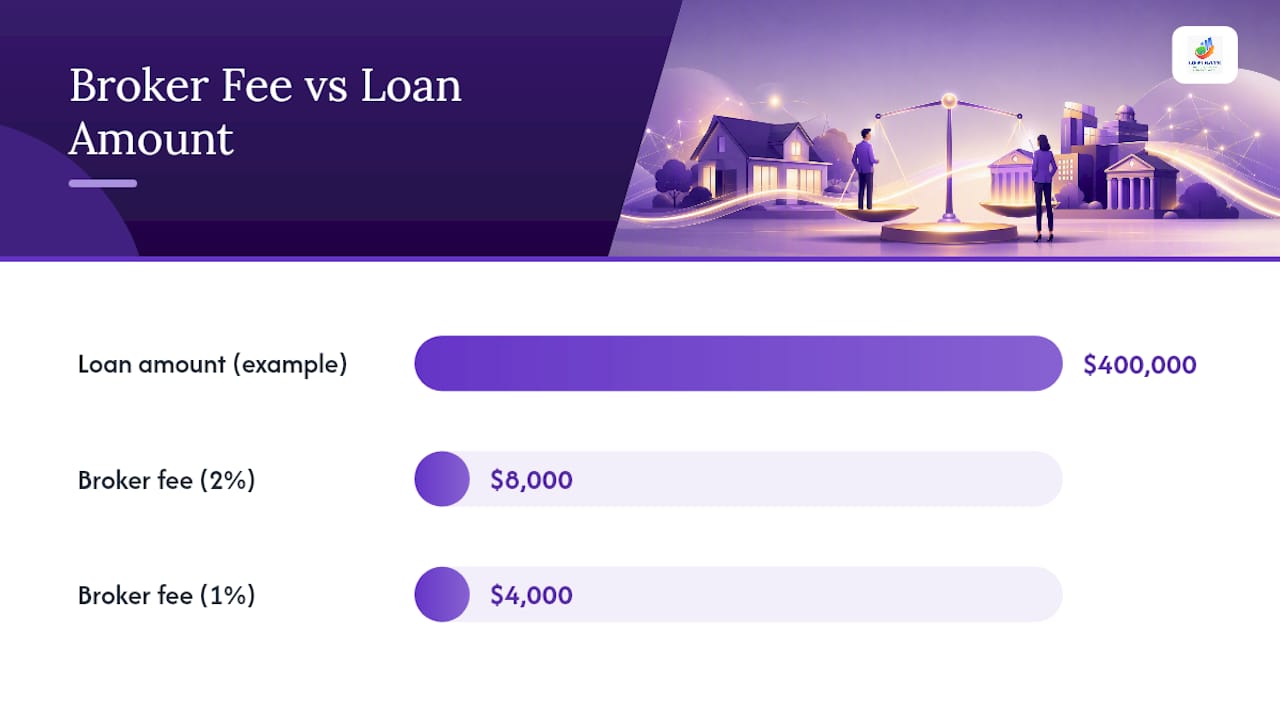
Statistic Callout: A broker fee sitting at 1% to 2% of the loan amount on a $400,000 mortgage works out to roughly $4,000 to $8,000. That's real money, but it's only meaningful in context: a broker who finds you a lower rate can offset that fee many times over across a 30-year term.
To actually compare costs, look at the same four lines on every Loan Estimate you receive:
- Interest rate and APR (APR captures fees, so it's the better apples-to-apples number)
- Origination charges and discount points
- Lender credits, which can offset your closing costs
- Total closing costs at the bottom of page two
Who Actually Benefits From a Broker vs. a Direct Lender?
Your financial profile decides this more than any marketing pitch does. Here's how to map yourself to the right lane.
- Self-employed or complex income: Brokers tend to help most here because they can shop your file across lenders with different underwriting appetites instead of hoping one bank's rulebook fits your tax returns.
- Thin or damaged credit: A broker's wider net of wholesale programs often surfaces options a single retail lender won't offer, since access to niche pricing tiers is exactly what a broker exists to unlock.
- Strong credit and a simple W2 income: A direct lender, especially one where you already bank, can be just as competitive and often faster, since there's no middle step to coordinate.
- Small down payment or a niche loan need (jumbo, investment property, unusual property type): Brokers frequently have more program variety here than a single retail shelf.
- You value speed over a rock-bottom rate: An existing bank relationship can mean simplified underwriting and loyalty pricing that a strong banking relationship sometimes unlocks on its own.
Pro Tip: Run the math on trade-offs, not just headlines. A broker might save you a quarter point on your rate but add a day or two to underwriting since your file passes through an extra layer of coordination. On most loans, the rate savings win. On a tight closing deadline, speed might matter more.
How Do You Actually Shop and Compare Offers?
Comparing a broker vs. lender quote only works if you request comparable paperwork from both and read it the same way every time.
- Request a Loan Estimate from each lender or broker you're considering. It's the standardized CFPB-regulated document that puts rate, APR, fees, and closing costs into the same format across every provider.
- Submit all applications within a 15 to 45 day window. Credit scoring models generally group mortgage inquiries made in that timeframe into a single inquiry, so shopping around won't tank your score.
- Line up the same fields side by side: interest rate, APR, points, origination fees, lender credits, prepayment terms, and how long your rate lock lasts.
- Ask every broker which lenders they actually work with and how they get paid.
- Ask every direct lender whether they offer loyalty perks, rate discounts for existing account holders, or any in-house pricing you wouldn't see advertised.
Line-item comparisons like this are where comparing mortgage rates properly actually pays off, since the difference between two Loan Estimates is rarely just the headline rate.
How Do You Verify a Broker's License and Spot Red Flags?
Before you sign anything, check the person's license and complaint history on NMLS Consumer Access, the national registry for mortgage originators. It's free, takes a couple of minutes, and tells you whether the broker or loan officer is actually licensed in your state.
Beyond that lookup, insist on two documents: written disclosure of how the broker gets paid, and your Loan Estimate. The CFPB is explicit that missing disclosure is itself a warning sign, not a technicality.
Watch for these red flags:
- Refusing to name which lenders they work with
- Vague or shifting descriptions of how fees are calculated
- Pressure to pay non-transparent fees upfront, before you've seen a Loan Estimate
- State licensing information covered by state agencies working alongside licensed broker oversight at the state level that a legitimate broker won't hesitate to share
What a mortgage broker matching service sees from the broker-matching side
Some mortgage broker matching platforms connect homebuyers and homeowners to licensed wholesale mortgage brokers who shop multiple lenders instead of pitching one rate sheet. That's the whole point of the model: you get a comparison instead of a single quote dressed up as your only option.
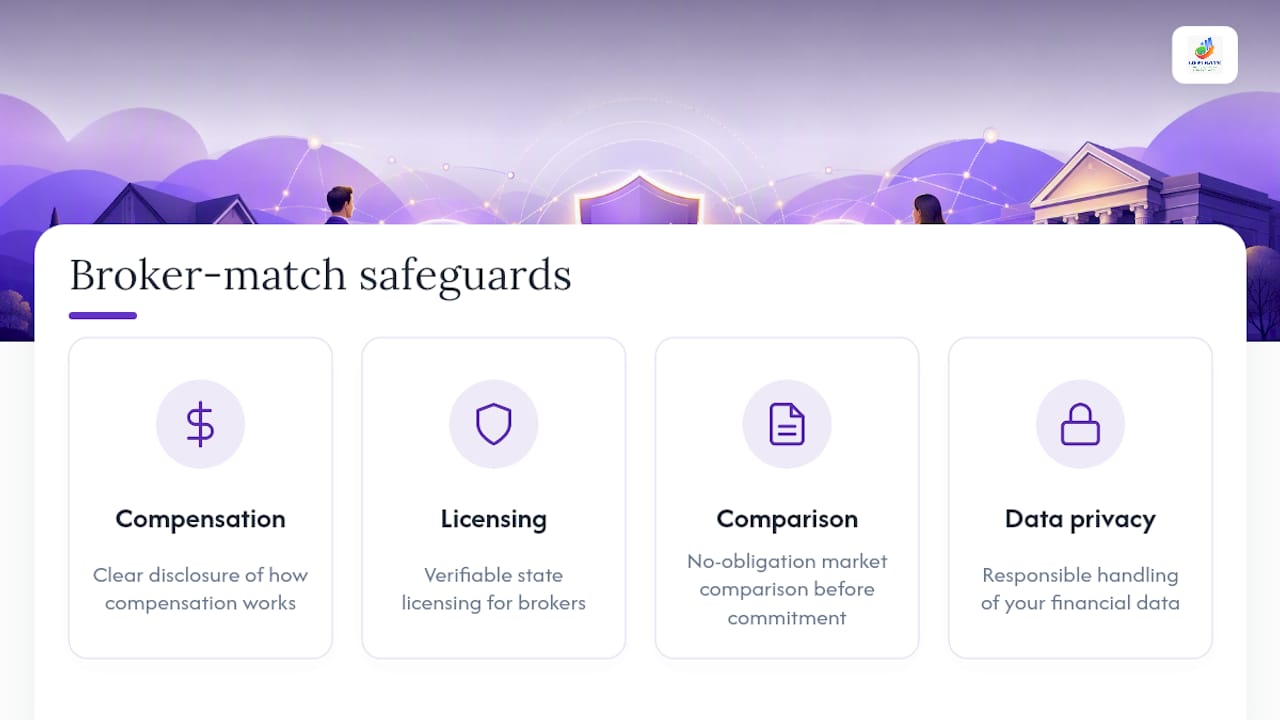
What a reputable broker match should give you, every time, is transparent disclosure of how compensation works, verifiable state licensing, a no-obligation comparison before you commit to anything, and responsible handling of your financial data. Anything less isn't worth your time.
The debate over broker vs. lender misses the real question, which is whether you're getting a genuine comparison or a single opinion dressed up as one. A direct lender will always tell you their rate is competitive. A broker's job is to prove it against the rest of the market. That's a structural difference, not a matter of who has better salespeople.
This article is general information, not a substitute for advice from a qualified financial advisor. Consult a qualified financial professional about your own circumstances before acting on anything here.
Sources
- What is the difference between a mortgage lender and a mortgage broker? | Consumer Financial Protection Bureau
- Loan officer vs. mortgage broker vs. mortgage lender - Experian
- NMLS Consumer Access
FAQ
Is It Better to Go Through a Broker or a Lender?
Neither wins automatically. Brokers tend to help more with complex financial profiles or niche loan needs, while direct lenders often work better for simple files where speed or an existing relationship matters more.
How Much Does a Mortgage Broker Make on a $500,000 Mortgage?
At the commonly cited 1% to 2% range, a broker typically earns a fee often paid by the lender rather than charged directly to you.
Is There a Downside to Using a Mortgage Broker?
The main risks are inconsistent disclosure and brokers who don't actually shop multiple lenders. Always confirm compensation in writing and verify their license through NMLS Consumer Access before moving forward.
Is It Better to Use a Mortgage Lender or a Broker for a First Home?
First-time buyers with straightforward income and strong credit often do fine with a direct lender, while those with self-employment income, thin credit files, or a smaller down payment tend to benefit more from a broker's wider access to loan programs.